

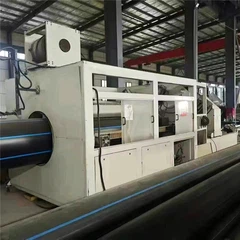
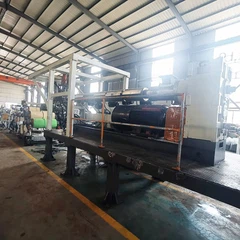
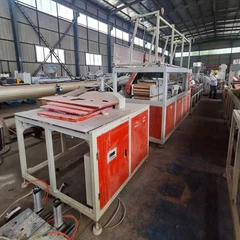
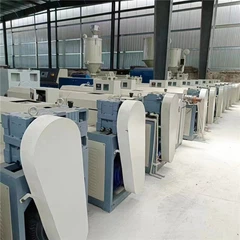

Used Granules Making Machine
Why Choose Us
Qingdao Confortune Machinery Co., Ltd. is a professional second-hand profile supplier with 20 years of industry experience. The company has introduced from Europe a number of multi-station processing centers and CNC lathes, CNC milling machines and a large number of advanced high-precision processing equipment. We specialize in producing Second Hand Extruder Machine, Second Hand PVC Extruder Machine, Second Hand Twin Screw Extruder, Used 45mm Single Screw Extruder, Second Hand Plastic Extrusion Machine, Used Extruder Machine, and other Second Hand Extruder.
Wide Product Range
We mainly sell all kinds of plastic different profile production line, all kinds of auxiliary plastic plate, sheet production line, plastic recycling (crushing, washing, granulation) line, centralized feeding system, such as plastic extrusion processing machinery and other products.
Products Sell Well
Our product are exported to Egypt, Pakistan, Poland, India, Turkey, Brazil, Peru, Mexico, Romania and other more than 20 countries and regions. Trusted and praised by customers.
Professional Solution
With rich experience and one-to-one service, we can help you choose products and answer technical questions.
Quick Transportation
We cooperate with professional sea shipping, air and logistics companies to provide you with the best transportation solution.
-
![Used Pvc Granules Making Machine]() Used Pvc Granules Making Machineused 80/156pvc granulator pelletizer machine,nearly new machines,most parts is new,500kg/h,but just cost half price,we can exchange 65/132 extruderread more
Used Pvc Granules Making Machineused 80/156pvc granulator pelletizer machine,nearly new machines,most parts is new,500kg/h,but just cost half price,we can exchange 65/132 extruderread more -
![Used Pvc Granulator Machines]()
-
![Used Pelletizing Machine]()
-
![Double Stage Granules Making Machine]() Double Stage Granules Making MachineDouble stage granules making machine brand:deke Water ring hot cutter Main extruder,160mm,132kw good condition,beautiful price,add my wa/wechet:+8618138403461read more
Double Stage Granules Making MachineDouble stage granules making machine brand:deke Water ring hot cutter Main extruder,160mm,132kw good condition,beautiful price,add my wa/wechet:+8618138403461read more -
![Used PE PP Granulator]() Used PE PP GranulatorPE PP granulation, 18 years of major brand machine, production capacity 350-400 kg/hread more
Used PE PP GranulatorPE PP granulation, 18 years of major brand machine, production capacity 350-400 kg/hread more -
![Second-hand PE Three-layer Pipe Production Line]() Second-hand PE Three-layer Pipe Production LineJinhu ABA three-layer co-extruded pipe line 450-800mmread more
Second-hand PE Three-layer Pipe Production LineJinhu ABA three-layer co-extruded pipe line 450-800mmread more -
![Used PE PP Pelletizing Machine]() Used PE PP Pelletizing MachinePE PP granulation, 18 years big brand machine, production capacity 350-400kghread more
Used PE PP Pelletizing MachinePE PP granulation, 18 years big brand machine, production capacity 350-400kghread more -
![PVC Pelletizing Production Line]()
-
![Used PE PP Granules Making Machine]()
-
![Used Pp/pe Granules Line]() Used Pp/pe Granules LinePE PP granulation, 18 years of big-name machine, production capacity of 350-400kg/hread more
Used Pp/pe Granules LinePE PP granulation, 18 years of big-name machine, production capacity of 350-400kg/hread more -
![Second-hand/uesd PVC Granulation Production Line]() Second-hand/uesd PVC Granulation Production Line65 132 PVC Pelletizing Production Line (Whole Line)read more
Second-hand/uesd PVC Granulation Production Line65 132 PVC Pelletizing Production Line (Whole Line)read more -
![Second-hand Plastic Granulation Machine]() Second-hand Plastic Granulation MachineUsed second-hand production line for recycling granulationread more
Second-hand Plastic Granulation MachineUsed second-hand production line for recycling granulationread more


What is Used Granules Making Machine
Granule machines are extruders used for recycling-reclaiming waste plastic to produce raw material. Netplasmak manufactures granule extruders to be used for recycling polyethylene, polypropylene and other types of polymers. If you want to know the specifications and prices of Used Granules Making Machine, please contact us!
High Productivity
One of the benefits is its high productivity. The production line can process a large amount of plastic waste in a short time. This means companies can recycle more plastic waste in less time, increasing productivity and profitability.
Particle Quality
Another significant advantage is the consistency of pellet quality. The line ensures that the pellets produced are of the same size and quality throughout the recycling process. This consistency is critical for companies that require uniform particles to produce high-quality products.
Flexibility in Plastic Recycling
Provides flexibility for plastic recycling. The line can process multiple plastic types, enabling the company to recycle different types of plastic waste to meet the needs of different customers. The line can also produce pellets of various sizes and shapes, making it a versatile tool for plastic recyclers.
Cost Effective Recycling
Cost-effective recycling can be achieved using a plastic recycling granulation line. The line's high productivity, consistency and flexibility can help companies reduce recycling costs. In turn, this can improve profitability and market competitive advantage.
Reduce Waste and Environmental Impact
Finally, using a plastic recycling and pelletizing line can reduce waste and environmental impact. The line can recycle plastic waste with minimal waste, reducing the amount of material that goes to landfill. Additionally, recycled plastic pellets can be used to produce a range of products, reducing the need for virgin plastic and its associated environmental impact.
Types of Plastic Granules Making Machine
Used Plastic Granules Making Machine
The cleaned plastic materials are put in a cutting machine and converted into small pieces. The cut pieces are put in an extruder where it is melted to give granule lumps. These lumps are put in grinding machine to obtain granules of required size and packed in 50 kgs.
Advantage: Plastic granules making machine has the advantage of simple process, high output, stable operation, low cost, high bearing capacity, long operating life and is easy to clean and maintain.
Used PP Granules Making Machine
PP granules machine refers to a type of industrial machinery used for the production of polypropylene (PP) granules. PP granules are small, pellet-like materials made from polypropylene resin, which is a thermoplastic polymer commonly used in a variety of applications such as packaging, textiles, automotive parts, and consumer products.
Advantage: By breaking down plastic waste into reusable granules, plastic granulator machines promote a circular economy approach to plastic use, where materials are recycled and reused, reducing the need for virgin plastic production and minimizing the environmental impact of plastic waste.
Used Twin Screw Extruder
Twin-screw extruders provide excellent mixing of material and forming and are widely used to process powder blends that need to be thoroughly mixed as well as being melted and formed. It consists of two screws parallel to each other that rotate inside the cylindrical barrel.
Advantage: Twin-screw extruders provide high mixing efficiency, high specific energy inputs and the ability to process solids and highly viscous material.
Used Corrugated Pipe Machine
Corrugated Pipe Machines are used to produce corrugated pipes made of PE, PP, EVA, PVC and PA with a precision of 9 mm to 1200 mm and are used in a wide range of industries because of their high strength and flexibility.
Advantage: They have a guaranteed life of 50 years and can be used for 100 years. Since plastics are smooth hydraulic, they have a high resistance to flow and the fluid flows with a higher filling rate. This advantage reduces the project costs by selecting a lower diameter group in the project.
Components of Plastic Granules Making Machine

Feeding System
Conveyor Belt: Transports plastic waste materials from the input point to the extruder.
Hopper: A large container that stores and feeds the plastic waste into the extruder. It ensures a continuous supply of material to the extruder.
Auger or Screw Feeder: Assists in moving the plastic material from the hopper to the extruder, ensuring a consistent flow of material.
Extruder
Barrel: A cylindrical chamber where plastic waste is fed and heated. It typically contains heating elements to melt the plastic.
Screw: A rotating screw inside the barrel that conveys and compresses the plastic material forward. The design of the screw (such as its length, pitch, and flight depth) affects the melting and mixing process.
Heating Elements: Electric heaters or other heating systems that maintain the temperature of the barrel to melt the plastic efficiently.
Drive System: Motor and gearbox assembly that provides power to rotate the screw at the desired speed.
Die Head
Die Plate: Shapes the molten plastic into strands of uniform diameter.
Die Holes: Configured according to the desired pellet size and shape. Different die heads can produce pellets of various shapes, such as cylindrical, spherical, or oval.
Die Heating System: Ensures consistent temperature across the die head to facilitate uniform pellet formation.
Water Cooling System
Water Tanks or Cooling Baths: Immerses the newly formed plastic strands or pellets in cold water to rapidly cool and solidify them.
Circulation System: Pumps water through the cooling system to maintain the desired temperature and remove excess heat from the pellets.
Pellet Cutter
Rotary Cutter or Pelletizer: Cuts the cooled plastic strands into uniform-sized pellets. It may consist of rotating blades or knives arranged in a cutting chamber.
Adjustable Cutting System: Allows operators to control the length of the pellets by adjusting the position of the cutting blades.
Air Blower System (optional)
Blowers or Fans: Generate airflow to remove excess moisture or debris from the surface of the plastic pellets.
Drying System: If needed, the air blower system may include heaters or desiccants to further dry the pellets before packaging.
Control Panel
Human-Machine Interface (HMI): Touchscreen or interface panel for operators to monitor and control the machine settings.
Temperature Controllers: Regulate the temperature of the extruder barrel, die head, and cooling system.
Speed Control: Adjusts the rotation speed of the extruder screw and pellet cutter.
Safety Interlocks: Ensure safe operation by preventing unauthorized access to moving parts and activating emergency stop mechanisms.
Safety Features
Emergency Stop Buttons: Immediately halts machine operation in case of emergencies.
Guards and Shields: Protect operators from exposure to hot surfaces, moving parts, and potential hazards.
Safety Sensors: Detect abnormal conditions such as overheating, motor overload, or material jams, triggering automatic shutdown or alerts.
Maintenance of Plastic Granules Making Machine
Under What Circumstances Plastic Pellet Making Machine Needs an Overhaul
The overhaul of the equipment means that the damage of the equipment is very serious or the damage is very serious. Mechanical performance is significantly degraded. At this time, the overhaul is carried out, such as the mechanical performance of the machine is significantly reduced, the fuel consumption is increased, the operation is not working, and the sound is abnormal. Or a comprehensive and thorough recovery repair method under the condition that the equipment can no longer perform normal production performance. At this time, the overhaul should be carried out according to the regulations, and the progress of the work should be arranged at the same time.
Equipment Installation Check
The waste plastic pellet making machine is also composed of various components. Before installation, check the individual equipment components, check the main steel structure, bearings, bolts, etc., and whether the surface condition of the parts is anti-corrosion, etc. A record for later testing.
Maintenance of Waste Plastic Granule Making Machine
When the waste plastic pellet making machine is in normal operation, it shall be carried out in accordance with the rules and regulations, daily and regular maintenance, regular maintenance, and several maintenance and repairs of the mechanical equipment during the specified time to clean, lubricate, adjust and disintegrate. Maintenance is carried out for the center content. The usual maintenance is mainly responsible for cleaning, fastening, lubrication, adjustment, and anti-corrosion. This is a daily inspection.
How to Choose Used Granules Making Machine
Market Share and Demand
Plastic granulators are used to enable scrap plastic to be reused in the production of plastic. The market share of plastic granulators is $3.4 billion. Current trends in the plastic granulators market include incorporating some additives to help soften or harden the plastic, depending on where it'll be reused, and mixing the granules with virgin material for the overall resin to maintain a certain quality.
Rotor
There are four types of rotors depending on what's being processed. Open, closed/solid, staggered, and segmented. The open rotor is suitable for heat-sensitive resins.
The closed rotor has no space between the knife and the shaft. Consequently, it allows cutting through thick feedstocks. The staggered rotor is suitable for cutting through heavy material, while the segmented rotor cuts through heavy material and increases the number of cuts per revolution.
Knife Design
The knives are mounted on the stationary bed or directly in the rotor. The spacing between the knives will determine the type of granule. A small knife space will result in softer material, while a bigger space between the knives results in more rigid granules.
Maintenance
Proper maintenance is essential for the machine to produce high-quality granules for a long period. Maintenance will also reduce dust on the granules. As granulators are not designed with maintenance in mind, professional maintenance is something that businesses should take into consideration before purchasing.
Intended Use
Businesses ought to know the use they will make of the plastic granulator. Some plastic granulators have a capacity of 1000 kg/hr, while others can process 3000 kg/hr. The method of granulation is also essential. Machines can use either extrusion, blow molding, injection molding, or recycling. The product being processed is another consideration, whether it's bottles or sheets.
Our Factory


Frequently Asked Questions
Q: What is a granule machine used for?
Q: What is the process of manufacturing granules?
Q: What is inside a granulator?
As the product enters the cutting chamber, the rotating knives cut the plastic into little pieces, until they are small enough to fit through the holes in the screen. The product will continue to mix and be cut until it is small enough to fall through the screen. The screen is situated under the rotating knives and can be changed so that the holes can be of different sizes depending on your required output size.
Q: Which granulator is right for you?
If you are confused about your application? At Rawmec, we manufacture Granulators and Shredders – and the output of each differs substantially. Therefore, if you're not certain of exactly what your equipment needs are, contact our engineers and they can quickly assess your needs and help you determine if a granulator is right for you.
Q: What is the types of granulators?
The purpose of the sieving process to which the particles are subjected inside the granulators is to do a kind of filtering by size, so that only the finest and smallest grains can pass through the sieves whose pores are smaller.
Once it has gone through the sieving process, homogenization of the size of the particles is achieved, they can be given the necessary treatment, depending on their purpose.
Q: What is the main motor of plastic granulators (server)?
Extrusion system: consists of barrel, screw, mold, and filter. It melts plastic materials into pieces, granules, powders, blocks, or other shapes. And then stabilized at temperature and pressure, measured by the screw, and extruded from the mold.
Drive system. It is mainly composed of a motor, reducer, and belt. Its function is to drive the screw and make the screw achieve the parameter uniform torque and rotation speed of granulators. Given numbers (such as temperature, pressure, rate, etc.). Thereby extruding the product we want.
Heating and cooling system. It is mainly composed of a heater outside the barrel. A cooling element is installed inside the screw. In addition, the function of this system is to heat or cool the screw barrel. Moreover, it ensures the extrusion temperature of the product as required by the specification.
Feeding system. It is mainly composed of a hopper and an automatic feeding device. It has the function of supplying the necessary materials for the extrusion system stably and continuously.
Q: what is the uses of the granulators?
Moreover, the screw barrel specially hardens, is wear-resistant, has good mixing efficiency and high output. The vacuum exhaust pipe design, or the design of the standard pipe mouth, can release moisture and exhaust gas during the process. The production process makes the discharge material more stable. The plastic particles are more durable and ensure the excellent quality of the product.
Plastic granulators are mainly used to process waste plastic film (industrial packaging film, agricultural film, greenhouse film, beer bags, bags, etc.). Moreover, this is the most widely used and popular plastic recycling processing machine type in the waste plastic recycling industry.
There are two ways to save energy. One is to keep the power part, and the other is to hold in the heating part.
Energy saving in power part: Mostly using an inverter, save energy through residual energy of the motor. For example, the real power of granulators is 50 Hz. In addition, you only need 30 Hz for production. The unspent energy will be wasted. So, the inverter will change the motor output power to achieve an energy-saving effect.
Energy saving in the heating section mainly uses an electromagnetic heating device. Moreover, the energy-saving rate is about 30%-70% compared with the old-fashioned resistor coil.
Q: What is the difference between granulator and grinder?
Q: What is the difference between extruder and granulator?
Q: What is rotary granulator?
Q: What is rapid mixer granulator?
Q: What is an impeller in a granulator?
Q: How does a plastic granulator work?
Qingdao Confortune Machinery Co., Ltd. is one of the leading used granules making machine manufacturers and suppliers in China. We warmly welcome you to wholesale cheap used granules making machine in stock here from our factory. All machines are with high quality and competitive price. Contact us for quotation.
used granules production machine, recycled plastic granules pelletizing unit, second hand plastic granules recycling apparatus