

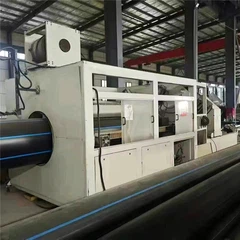
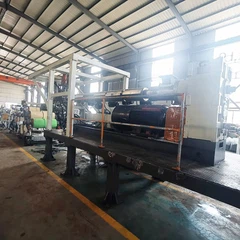
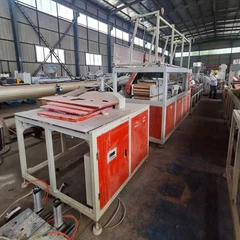
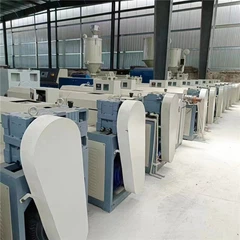

Corrosion is a common and persistent problem in used profile production lines, which can significantly reduce the efficiency and lifespan of the equipment. As a supplier of Used Profile Extruder Production Line, I understand the importance of preventing corrosion to ensure the optimal performance of these lines. In this blog, I will share some effective strategies on how to prevent corrosion in a used profile production line.
Understanding the Causes of Corrosion in Used Profile Production Lines
Before delving into prevention methods, it's crucial to understand what causes corrosion in used profile production lines. Corrosion is essentially an electrochemical process where metal reacts with its environment, leading to the deterioration of the metal.
In a used profile production line, several factors can contribute to corrosion. Firstly, the materials being processed can play a role. For example, if the production line is used to extrude PVC profiles, certain additives or stabilizers in the PVC material might be corrosive to the metal components of the line over time. Secondly, the operating environment matters. High humidity, exposure to chemicals, and even temperature fluctuations can accelerate the corrosion process. Additionally, the age of the equipment in a used production line can make it more susceptible to corrosion as the protective coatings may have worn off.
Regular Cleaning and Maintenance
One of the most fundamental steps in preventing corrosion is regular cleaning and maintenance. After each production run, it's essential to clean the production line thoroughly. This involves removing any residual materials, such as plastic pellets, dust, or debris, from all the surfaces of the equipment.
For the extruder, which is a key component of the 600mm PVC Profile Line, clean the screw and barrel. Use a suitable cleaning agent that is compatible with the material being processed and the metal of the equipment. Avoid using abrasive cleaners that could scratch the surface of the metal, as scratches can act as sites for corrosion to start.
In addition to cleaning, regular maintenance checks should be carried out. Inspect the entire production line for any signs of wear, loose parts, or leaks. Tighten any loose bolts or screws, as gaps between components can allow moisture and contaminants to enter, promoting corrosion. Replace any worn-out seals or gaskets to prevent the ingress of corrosive substances.
Applying Protective Coatings
Applying protective coatings to the metal surfaces of the used profile production line is an effective way to prevent corrosion. There are various types of protective coatings available, each with its own advantages.
Epoxy coatings are popular for their excellent adhesion and resistance to chemicals and moisture. They can form a durable barrier on the metal surface, protecting it from the corrosive effects of the environment. Another option is zinc-rich coatings. Zinc acts as a sacrificial anode, which means it corrodes preferentially to the underlying metal, providing long - term protection.


When applying a protective coating, ensure that the surface of the metal is properly prepared. This may involve sandblasting or abrasive cleaning to remove any existing rust, paint, or contaminants. After application, the coating should be allowed to dry and cure fully according to the manufacturer's instructions.
Controlling the Operating Environment
Controlling the operating environment is another important aspect of corrosion prevention. As mentioned earlier, high humidity and exposure to chemicals can accelerate corrosion.
To reduce humidity, consider installing dehumidifiers in the production area. This helps to keep the relative humidity at a level where corrosion is less likely to occur. The ideal relative humidity level for most metal equipment is around 30 - 50%.
If the production line is exposed to chemicals, ensure proper ventilation in the workspace. This helps to remove any fumes or vapors that could be corrosive. Store chemicals properly, away from the production line, and use spill containment measures to prevent accidental spills on the equipment.
Using Corrosion Inhibitors
Corrosion inhibitors are substances that can be added to the operating environment or the materials being processed to reduce the corrosion rate. There are two main types of corrosion inhibitors: anodic inhibitors and cathodic inhibitors.
Anodic inhibitors work by forming a protective film on the anode (the part of the metal that is more likely to corrode), preventing the metal from dissolving. Cathodic inhibitors, on the other hand, slow down the reduction reaction at the cathode, which is also involved in the corrosion process.
In a used profile production line, corrosion inhibitors can be added to the cooling water system if the equipment uses water for cooling. This helps to prevent corrosion inside the pipes and heat exchangers. Some corrosion inhibitors can also be added to the lubricants used in the production line to protect the moving parts.
Monitoring Corrosion
Regular monitoring of the corrosion level in the used profile production line is essential to detect early signs of corrosion and take preventive measures in a timely manner. There are several methods for monitoring corrosion.
Visual inspection is the simplest and most straightforward method. Regularly examine the equipment for any signs of rust, discoloration, or pitting. Ultrasonic testing can be used to detect internal corrosion in pipes and other components. This method works by sending ultrasonic waves through the material and measuring the time it takes for the waves to reflect back. A change in the reflection time can indicate the presence of corrosion.
Electrochemical methods, such as corrosion potential monitoring, can also be used to measure the tendency of the metal to corrode. By continuously monitoring these parameters, it's possible to predict when corrosion might occur and take appropriate actions.
Training the Operators
Lastly, training the operators of the used profile production line is crucial for corrosion prevention. Operators should be educated about the causes and effects of corrosion and the importance of following the preventive measures.
Train them on proper cleaning and maintenance procedures, how to apply protective coatings correctly, and how to control the operating environment. They should also be trained on how to use corrosion inhibitors safely and how to monitor corrosion. By having well - trained operators, the risk of corrosion in the production line can be significantly reduced.
Conclusion
Preventing corrosion in a used profile production line is a multi - faceted task that requires a combination of regular cleaning and maintenance, applying protective coatings, controlling the operating environment, using corrosion inhibitors, monitoring corrosion, and training the operators. By implementing these strategies, the lifespan of the production line can be extended, and its efficiency can be maintained.
If you are interested in our Used Profile Extruder Production Line, 600mm PVC Profile Line, or Wpvc Profile Line, and want to discuss further about corrosion prevention or other aspects, feel free to contact us for procurement and negotiation.
References
- Fontana, M. G. (1986). Corrosion Engineering. McGraw - Hill.
- Uhlig, H. H., & Revie, R. W. (1985). Corrosion and Corrosion Control. Wiley - Interscience.
- Davies, C. W. (1998). Principles of Corrosion Engineering and Corrosion Control. Elsevier.