

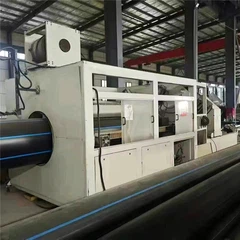
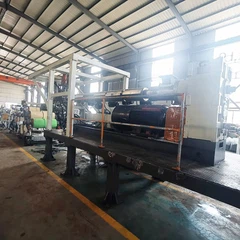
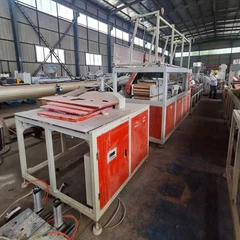
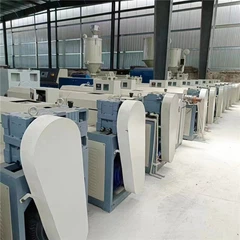

As a supplier of used pipe production lines, I've had the privilege of working closely with various clients in the industry. Over the years, I've witnessed firsthand the common problems that can arise when dealing with these production lines. In this blog post, I'll share some of these issues and offer insights on how to address them.
1. Wear and Tear
One of the most prevalent problems with used pipe production lines is wear and tear. These machines have been in operation for a certain period, and components such as screws, barrels, and molds are subject to constant friction and pressure. As a result, they can experience significant wear over time.
The screws, which are responsible for melting and conveying the plastic material, are particularly prone to wear. When the screw's flight depth decreases due to wear, it can lead to reduced plasticization efficiency. This means that the plastic may not be melted and mixed thoroughly, resulting in pipes with inconsistent quality. For example, the pipes may have uneven wall thickness or contain unmelted plastic particles.
Barrels also face similar issues. The inner surface of the barrel can wear out, causing a decrease in the clearance between the screw and the barrel. This can lead to increased power consumption as the screw has to work harder to push the plastic through the barrel. Moreover, the wear can affect the temperature control within the barrel, which is crucial for proper plastic processing.
Molds are another area where wear and tear can be a problem. The mold's surface finish can degrade over time, leading to pipes with poor surface quality. Pipes may have rough surfaces or visible marks, which can affect their aesthetic appeal and, in some cases, their functionality.
To address these issues, regular maintenance and inspection are essential. Components that are severely worn should be replaced promptly. For instance, if the screw's wear exceeds a certain limit, it's advisable to install a new one. Additionally, using high - quality replacement parts can extend the lifespan of the production line and improve the overall quality of the pipes. You can find a wide range of used components for your production line, such as those in our Second Hand Plastic Pipe Machine.
2. Electrical and Control System Issues
The electrical and control systems of used pipe production lines can also present problems. Over time, electrical components such as motors, sensors, and controllers can deteriorate.
Motors are the powerhouses of the production line, and any issues with them can bring the entire operation to a halt. For example, the motor's insulation may degrade due to heat and moisture, leading to short circuits or reduced performance. A malfunctioning motor may not be able to provide the required torque, resulting in slow or inconsistent production speeds.
Sensors play a crucial role in monitoring various parameters such as temperature, pressure, and speed. If a sensor fails, it can lead to inaccurate readings, which in turn can cause problems in the production process. For instance, an incorrect temperature reading can result in the plastic being processed at the wrong temperature, leading to poor pipe quality.
Controllers are responsible for coordinating the operation of different components of the production line. A faulty controller can cause the production line to operate erratically, with components not working in sync. This can lead to production delays and increased waste.
To tackle these electrical and control system issues, it's important to have a qualified electrician perform regular inspections. They can check for loose connections, damaged wires, and faulty components. Upgrading the control system to a more modern and reliable one can also improve the overall performance and stability of the production line. Our Used、second - hand Pipe Extruders come with proper electrical and control system checks to ensure their functionality.
3. Alignment and Calibration Problems
Proper alignment and calibration of the production line components are crucial for producing high - quality pipes. However, used production lines may have alignment issues due to factors such as vibration during operation, improper installation, or movement over time.
Misalignment of the extruder, die, and cooling system can lead to pipes with ovality or uneven wall thickness. For example, if the die is not properly aligned with the extruder, the plastic may flow unevenly, resulting in pipes that are not circular in cross - section.


Calibration problems can also occur, especially in the measuring and control devices. If the thickness gauge is not calibrated correctly, the pipes may not meet the required wall thickness specifications. This can be a significant problem, especially in applications where precise wall thickness is critical, such as in plumbing or gas pipelines.
To solve alignment and calibration issues, a professional technician should be called in to perform a comprehensive alignment and calibration check. They can use specialized tools and equipment to ensure that all components are properly aligned and that the measuring devices are accurately calibrated. This will help to improve the dimensional accuracy of the pipes and reduce the rejection rate.
4. Lack of Documentation and Technical Support
When purchasing a used pipe production line, one of the common challenges is the lack of complete documentation. The previous owner may not have kept detailed records of the machine's maintenance history, operating parameters, or technical specifications.
Without proper documentation, it can be difficult to operate the production line efficiently. For example, if the operator doesn't know the correct temperature settings for a particular plastic material, it can lead to poor pipe quality. Additionally, troubleshooting becomes more challenging as there is no clear reference to identify potential problems.
Technical support can also be limited for used production lines. The original manufacturer may not provide the same level of support for a used machine as they do for new ones. This can be a significant issue, especially when facing complex problems that require in - depth technical knowledge.
To overcome these problems, it's advisable to work with a reliable supplier who can provide as much documentation as possible. At our company, we make every effort to collect and organize all relevant information about the used production lines we sell. We also offer technical support to our clients, helping them to operate and maintain the production lines effectively. You can explore our Second - hand Single - layer PE Pipe Production Line and get detailed information about its operation and maintenance.
Conclusion
In conclusion, while used pipe production lines offer a cost - effective solution for many businesses, they do come with their fair share of common problems. Wear and tear, electrical and control system issues, alignment and calibration problems, and the lack of documentation and technical support are some of the main challenges that users may face.
However, with proper maintenance, regular inspections, and the right technical support, these problems can be effectively managed. As a supplier of used pipe production lines, we are committed to providing our clients with high - quality machines, comprehensive documentation, and reliable technical support.
If you are considering purchasing a used pipe production line or are facing issues with your existing one, we encourage you to contact us for a consultation. Our team of experts is ready to assist you in finding the best solutions for your production needs.
References
- "Plastics Extrusion Technology" by Allan A. Griff.
- "Handbook of Plastic Pipe Systems" edited by Rudolf K. Miller.