

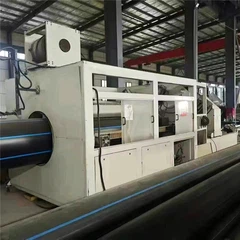
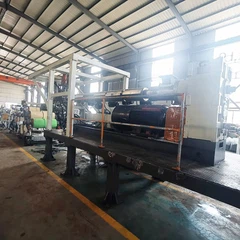
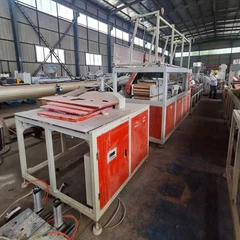
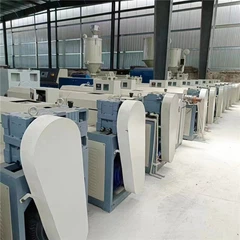

Hey there! As a supplier of second - hand pipe extruders, I often get asked about the installation requirements for these machines. So, I thought I'd put together a blog post to share all the important details.
1. Site Preparation
First things first, you need to find the right spot for your second - hand pipe extruder. The site should be large enough to accommodate the machine and all its associated equipment. You'll need to leave some extra space around the extruder for easy access during operation, maintenance, and repairs.
The floor where you plan to install the extruder needs to be flat and level. An uneven floor can cause the machine to vibrate excessively during operation, which may lead to premature wear and tear of its components. Also, the floor should be strong enough to support the weight of the extruder. Usually, a concrete floor is a great choice as it provides a stable base.
Ventilation is another crucial factor. Pipe extruders generate heat and fumes during operation. Without proper ventilation, the heat can build up in the room, causing discomfort to the operators and potentially damaging the machine. You should install exhaust fans or a ventilation system to ensure that the hot air and fumes are removed from the area. A well - ventilated space also helps in maintaining a safe working environment.
2. Electrical Requirements
The electrical supply for your second - hand pipe extruder is of utmost importance. You need to make sure that the power supply in your facility matches the requirements of the machine. Check the voltage, frequency, and amperage ratings specified in the machine's manual.
It's advisable to have a dedicated electrical circuit for the extruder. This helps in preventing power surges and fluctuations from other equipment in the facility from affecting the extruder's performance. A circuit breaker should be installed to protect the machine from electrical overloads.
Grounding is also essential. A properly grounded extruder reduces the risk of electrical shock to the operators and protects the machine from electrical faults. Make sure to follow the electrical grounding instructions provided by the manufacturer.
3. Water Supply
Most pipe extruders require a water supply for cooling purposes. The water helps in maintaining the optimal temperature of the extruder's components, especially the barrel and the die. You need to ensure that there is a reliable water source available near the installation site.
The water should be clean and free from impurities. Dirty water can clog the cooling channels in the machine, reducing its cooling efficiency. A water filtration system can be installed to remove any debris or contaminants from the water.
You also need to consider the water pressure and flow rate. The machine's manual will specify the required water pressure and flow rate for proper cooling. If the water pressure is too low, the cooling may not be effective, and if it's too high, it can cause damage to the cooling system.
4. Raw Material Handling
Proper raw material handling is necessary for the smooth operation of the pipe extruder. You need to have a storage area for the raw materials, such as PVC resin. The storage area should be dry and clean to prevent the raw materials from getting contaminated.
A feeding system is required to transfer the raw materials from the storage area to the extruder. There are different types of feeding systems available, such as gravity feeders and volumetric feeders. Choose the one that is suitable for your production requirements.
Make sure that the feeding system is properly calibrated to ensure a consistent flow of raw materials into the extruder. An inconsistent flow can lead to variations in the quality of the pipes produced.
5. Auxiliary Equipment
In addition to the main pipe extruder, you'll need to install some auxiliary equipment. This includes a haul - off unit, a cutter, and a stacking system.
The haul - off unit is responsible for pulling the extruded pipe at a constant speed. It needs to be aligned properly with the extruder to ensure that the pipe is pulled straight. The cutter is used to cut the extruded pipe into the desired lengths. You need to set the cutting length accurately to meet your production requirements.
The stacking system is used to stack the cut pipes neatly. It helps in organizing the finished products and makes it easier for storage and transportation.
Our Second - Hand Pipe Extruders
At our company, we offer a wide range of second - hand pipe extruders. We have 75mm - 315mm PVC Pipe Line and 16mm - 50mmPVC Pipe Line which are suitable for different production needs. Our Old Pvc Pipe Production Line is also a great option for those looking for cost - effective solutions.

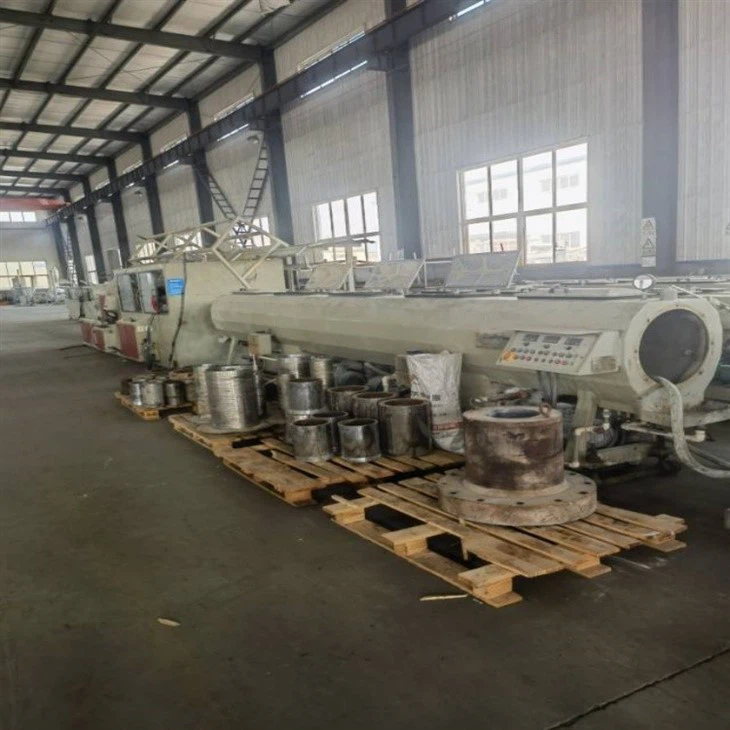
All our machines are thoroughly inspected and tested before being offered for sale. We also provide installation support and after - sales service to ensure that you have a hassle - free experience.
Conclusion
Installing a second - hand pipe extruder requires careful planning and attention to detail. By following the installation requirements mentioned above, you can ensure that your machine operates efficiently and produces high - quality pipes.
If you're interested in purchasing a second - hand pipe extruder, feel free to reach out to us. We'd be more than happy to discuss your requirements and help you find the right machine for your business. Let's start a conversation and see how we can work together to meet your production goals.
References
- Manufacturer's manuals of second - hand pipe extruders
- Industry standards for pipe extruder installation