

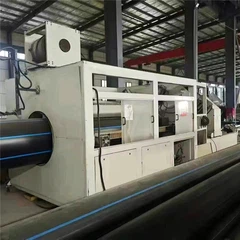
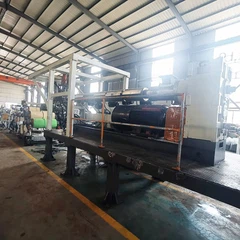
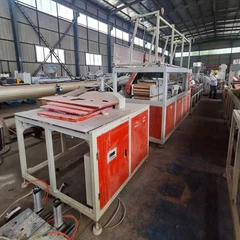
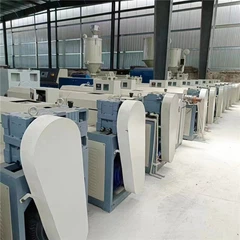

Hey there! As a supplier of used twin screw extruders, I often get asked about the control system of these machines. So, I thought I'd take a moment to break it down for you in a way that's easy to understand.
First off, let's talk about what a twin screw extruder is. It's a type of machine that's used in a whole bunch of industries, like plastics, food, and pharmaceuticals. It works by using two intermeshing screws to mix, melt, and convey materials through a barrel. The control system of a twin screw extruder is what keeps everything running smoothly and ensures that the final product meets the desired specifications.
The Basics of a Control System
At its core, the control system of a used twin screw extruder is made up of three main components: the sensors, the controller, and the actuators.
Sensors
Sensors are like the eyes and ears of the extruder. They're responsible for measuring various parameters, such as temperature, pressure, and screw speed. For example, temperature sensors are placed along the barrel to monitor the heat of the material as it moves through the extruder. This is crucial because different materials require different processing temperatures to achieve the right consistency and quality. Pressure sensors, on the other hand, help to ensure that the material is being pushed through the extruder at the correct rate. If the pressure is too high or too low, it can lead to issues like uneven mixing or blockages.
Controller
The controller is the brain of the operation. It takes the data from the sensors and uses it to make decisions about how to adjust the extruder's settings. In most modern used twin screw extruders, the controller is a computerized system that can be programmed to follow specific recipes. For instance, if you're processing a particular type of plastic, you can input the ideal temperature, screw speed, and pressure settings into the controller. The controller will then continuously monitor the sensors and make any necessary adjustments to keep the process within the desired range.
Actuators
Actuators are the muscles of the extruder. They're the components that actually carry out the commands from the controller. For example, if the controller determines that the temperature in a certain section of the barrel is too low, it will send a signal to the heater (an actuator) to increase the heat. Similarly, if the screw speed needs to be adjusted, the controller will send a signal to the motor (another actuator) to speed up or slow down.
Types of Control Systems
There are two main types of control systems commonly found in used twin screw extruders: open-loop and closed-loop control systems.
Open-Loop Control Systems
Open-loop control systems are the simpler of the two. In an open-loop system, the controller sends commands to the actuators based on pre-programmed settings, without taking into account the actual conditions inside the extruder. For example, if the recipe calls for a certain screw speed, the controller will set the motor to that speed and keep it there, regardless of any changes in the material or other factors. While open-loop systems are relatively easy to set up and operate, they're not as precise as closed-loop systems. They're more suitable for applications where a high degree of accuracy isn't required.
Closed-Loop Control Systems
Closed-loop control systems, on the other hand, are much more sophisticated. In a closed-loop system, the controller continuously monitors the data from the sensors and compares it to the desired setpoints. If there's a difference between the actual and desired values, the controller will make adjustments to the actuators to bring the process back into line. For example, if the temperature sensor detects that the temperature in the barrel is higher than the setpoint, the controller will reduce the power to the heater until the temperature drops to the desired level. Closed-loop systems offer much greater precision and control, making them ideal for applications where quality and consistency are critical.
Importance of a Good Control System
Having a reliable control system in a used twin screw extruder is absolutely essential. Here are a few reasons why:
Quality Control
A good control system ensures that the final product meets the required quality standards. By maintaining precise control over parameters like temperature, pressure, and screw speed, it helps to prevent issues such as uneven mixing, charring, or undercooking. This means that you can produce consistent, high-quality products every time.
Efficiency
An efficient control system can help to reduce energy consumption and waste. By optimizing the process parameters, it ensures that the extruder is running at its most efficient level. For example, by accurately controlling the temperature, you can prevent overheating and save on energy costs. Additionally, by minimizing the occurrence of defects, you can reduce the amount of scrap material and increase overall productivity.
Safety
Safety is always a top priority when operating any industrial equipment. A well-designed control system includes safety features, such as emergency stop buttons and over-temperature protection. These features help to prevent accidents and protect both the operators and the equipment.
Our Offerings
As a supplier of used twin screw extruders, we understand the importance of a reliable control system. That's why we carefully inspect and test all of our machines to ensure that their control systems are in top-notch condition. We also offer a range of other used equipment, such as Second-hand Granulation Production Line, Used Drip Irrigation Pipe Extrusion Lines, and Used Corrugated Pipe Machine.
If you're in the market for a used twin screw extruder or any other related equipment, we'd love to hear from you. Our team of experts is always on hand to answer your questions and help you find the right solution for your needs. Whether you're a small business looking to expand your production capabilities or a large corporation in need of a cost-effective replacement, we've got you covered.
So, don't hesitate to reach out and start a conversation. We're confident that we can provide you with a high-quality used twin screw extruder that will meet your requirements and exceed your expectations.


References
- "Twin Screw Extrusion Technology" by James L. White and Joseph F. Carley
- "Plastics Extrusion Technology" by Allan A. Griff
That's all for now. I hope this blog post has given you a better understanding of the control system of a used twin screw extruder. If you have any more questions, feel free to drop them in the comments below.