


In the dynamic world of plastics processing, second - hand extruders play a crucial role. As a seasoned supplier of Second Hand Extruders, I've witnessed firsthand the significance of die design in these machines. Die design is not just a technical aspect; it is the key to unlocking the full potential of a second - hand extruder.
Understanding the Basics of Die Design
At its core, the die of an extruder is a tool that shapes the molten plastic into the desired cross - sectional profile. The die design determines the final product's shape, size, and quality. For a second - hand extruder, a well - designed die can transform a machine that might seem ordinary into a high - performance production unit.
When it comes to second - hand extruders, the die design must take into account the machine's existing capabilities. These machines have already seen some use, and their components may have experienced wear and tear. Therefore, the die design should be optimized to work in harmony with the extruder's current state.
Key Factors in Die Design for Second - Hand Extruders
Material Compatibility
One of the primary considerations in die design is the type of plastic material to be processed. Different plastics have different flow characteristics, melting points, and viscosities. For example, polypropylene has a relatively low melting point and good flow properties, while polycarbonate is more viscous and requires higher processing temperatures. A second - hand extruder may have limitations in terms of temperature control and pressure capabilities. Thus, the die design must be tailored to the specific material to ensure smooth extrusion.
Flow Distribution
Uniform flow distribution is essential for producing high - quality products. In a second - hand extruder, the flow channels in the die need to be carefully designed to ensure that the molten plastic is evenly distributed across the cross - section of the die. Any unevenness in the flow can lead to defects such as thickness variations, warping, or surface imperfections in the final product.
Die Geometry
The geometry of the die is another critical factor. The shape of the die opening determines the shape of the extruded product. For example, a circular die opening will produce a round profile, while a rectangular die opening will result in a flat or rectangular product. The die geometry also affects the flow of the plastic. A well - designed die will have a smooth transition from the inlet to the outlet, minimizing pressure drops and ensuring a consistent flow.
Types of Dies for Second - Hand Extruders
Sheet Dies
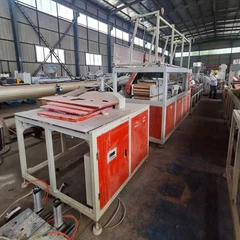
Sheet dies are used to produce flat plastic sheets. These dies typically have a wide, rectangular opening. The design of a sheet die for a second - hand extruder must take into account the machine's ability to maintain a uniform thickness across the width of the sheet. Sheet dies often incorporate adjustable lips to control the thickness of the sheet.
Pipe Dies
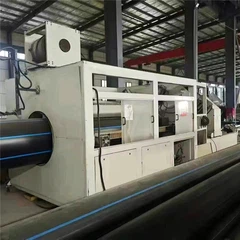
Pipe dies are used to produce plastic pipes. The design of a pipe die is more complex than that of a sheet die. It must ensure that the molten plastic forms a uniform wall thickness around the circumference of the pipe. Pipe dies often have a mandrel in the center to create the hollow interior of the pipe.

Profile Dies
Profile dies are used to produce plastic products with complex cross - sectional shapes. These dies can be customized to produce a wide range of profiles, such as window frames, door seals, and automotive trim. The design of a profile die for a second - hand extruder requires careful consideration of the plastic's flow behavior and the machine's capabilities.
Advantages of a Well - Designed Die for Second - Hand Extruders
Cost - Effectiveness
A well - designed die can significantly improve the performance of a second - hand extruder, reducing waste and increasing production efficiency. This, in turn, can lead to cost savings for the end - user. By optimizing the die design, the extruder can produce high - quality products with fewer defects, reducing the need for rework and scrap.
Product Quality
The quality of the final product is directly related to the die design. A well - designed die ensures that the plastic is extruded uniformly, resulting in a product with consistent dimensions, smooth surfaces, and excellent mechanical properties. This is especially important for applications where high - quality products are required, such as in the automotive and medical industries.
Flexibility
A well - designed die can also provide flexibility in terms of the types of products that can be produced. With a single second - hand extruder, different dies can be used to produce a variety of products. This allows manufacturers to adapt to changing market demands and produce a wider range of products without having to invest in multiple machines.
Our Offerings as a Second - Hand Extruder Supplier
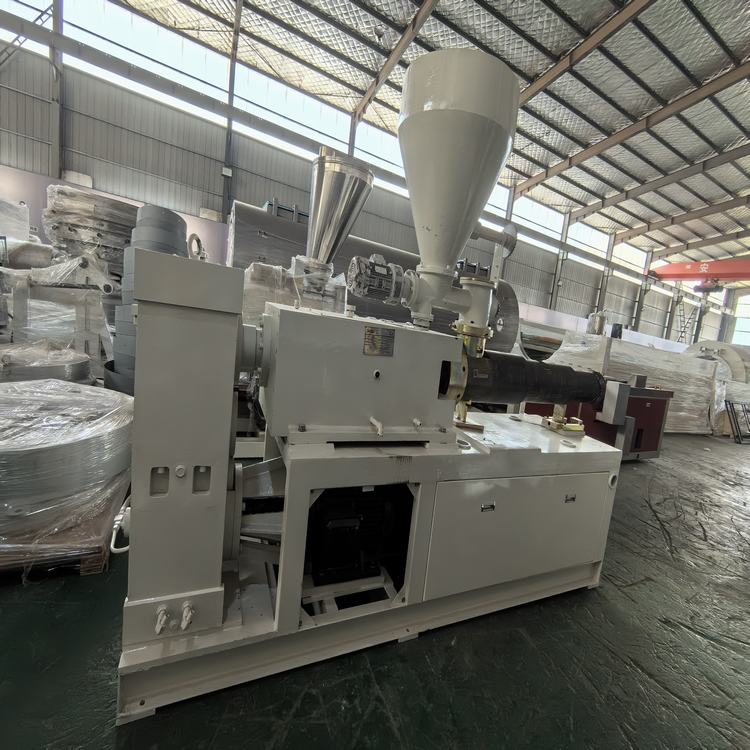
As a supplier of Second Hand Extruders, we understand the importance of die design. We offer a wide range of second - hand extruders, including Used Conical Twin Screw Extruder, Used Extruder Machine, and Used 45mm Single Screw Extruder. Our team of experts can assist you in selecting the right die design for your specific needs.
We also provide die design and manufacturing services. Our experienced engineers can design custom dies that are optimized for your second - hand extruder. Whether you need a sheet die, a pipe die, or a profile die, we can create a solution that meets your requirements.
Contact Us for Your Second - Hand Extruder Needs
If you are in the market for a second - hand extruder or need assistance with die design, we invite you to contact us. Our team is ready to answer your questions and help you find the best solution for your business. We are committed to providing high - quality products and services at competitive prices.
References
- "Plastics Extrusion Technology" by Allan A. Griff.
- "Extrusion Dies for Plastics and Rubber" by John A. Brydson.
- "Handbook of Plastic Extrusion Technology" by Wilmer Michaeli.