


When it comes to the production of HDPE pipes, one of the common questions that manufacturers and potential buyers often ask is about the minimum wall thickness that an Old HDPE Pipe Machine can produce. As a long - time supplier of Old HDPE Pipe Machines, I've encountered this query numerous times. In this blog, I'll delve into the various factors influencing the minimum wall thickness and share some practical insights based on our experience in the market.
Factors Affecting the Minimum Wall Thickness
Machine Design and Mechanics
The design of an Old HDPE Pipe Machine plays a crucial role in determining the minimum wall thickness. Older models may have limitations in terms of precision and control. For instance, the extrusion screw's design and its ability to convey and melt the HDPE material uniformly can impact how thin the pipe wall can be. If the screw has worn out over time, it may not be able to generate a consistent flow of molten plastic, which is essential for producing pipes with thin walls.
The die head is another critical component. Older die heads might not be as precisely engineered as modern ones. The distribution of the molten HDPE within the die head has to be evenly arranged to form a uniform pipe wall. Any irregularities in the die head can lead to uneven wall thickness or make it impossible to produce pipes with very thin walls.
Material Properties
HDPE materials have different characteristics that can affect the minimum wall thickness achievable. The melt flow index (MFI) of the HDPE is significant. A higher MFI means the material is more fluid at a given temperature. In an Old HDPE Pipe Machine, using a HDPE with a very high MFI might be challenging for producing thin - walled pipes. The high fluidity could cause the molten plastic to sag or deform during the extrusion process, making it difficult to maintain a consistent and thin wall.


On the other hand, a low MFI material might require more pressure to extrude, which the aging pump and motor systems in an old machine may not be able to provide efficiently. This can limit the ability to produce thinner walls as the machine struggles to push the stiffer material through the die.
Operator Skill and Experience
Even with the constraints of an old HDPE pipe machine, an experienced operator can make a significant difference in achieving the minimum wall thickness. Skilled operators know how to fine - tune the machine settings, such as temperature, pressure, and extrusion speed. They can also quickly identify and correct issues like material flow irregularities or fluctuations in temperature that could affect the wall thickness.
In contrast, a novice operator may not be as adept at handling the idiosyncrasies of an old machine, which can prevent the production of pipes with the minimum possible wall thickness.
Typical Range of Minimum Wall Thickness for Old HDPE Pipe Machines
Based on our years of experience in supplying Old HDPE Pipe Machines, the typical minimum wall thickness that these machines can produce usually ranges from 1.5 mm to 2.5 mm. However, this range can vary depending on the factors mentioned above.
For machines that are relatively well - maintained and were originally designed with better precision, it might be possible to achieve a minimum wall thickness closer to 1.5 mm. These machines often have components that have been regularly serviced, and the operators are highly skilled in optimizing the machine's performance.
On the other hand, older machines that have not received proper maintenance or have severe wear and tear may only be able to produce pipes with a minimum wall thickness of around 2.5 mm. These machines may face issues such as inconsistent material flow or limited pressure generation, which prevent them from producing thinner - walled pipes.
Case Studies
We've had customers who were able to push the boundaries of the minimum wall thickness with our Old HDPE Pipe Machines. One of our clients, a small - scale pipe manufacturer, was using an Old HDPE Pipe Machine to produce pipes for agricultural irrigation. By carefully selecting a HDPE material with an appropriate MFI and having a highly experienced operator on - site, they were able to produce pipes with a wall thickness of 1.8 mm. This not only saved them on material costs but also made their pipes more lightweight and easier to install.
In another instance, a large - scale industrial pipe producer was using a more worn - out Old HDPE Pipe Machine. Despite their best efforts, they could only achieve a minimum wall thickness of 2.3 mm. The machine's extrusion screw had significant wear, and the die head was not as precise as it once was, which limited their ability to produce thinner - walled pipes.
Our Product Offerings
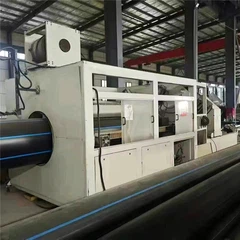
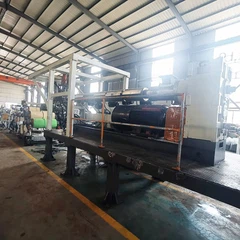
As a supplier of Old HDPE Pipe Machines, we offer a range of options to meet different production requirements. Our Second - hand PE Pipe Extruder Production Line is a comprehensive solution that includes all the necessary components for pipe production. It has been carefully inspected and refurbished to ensure optimal performance.
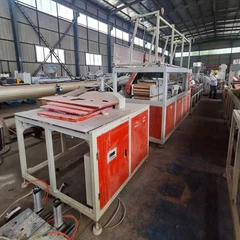
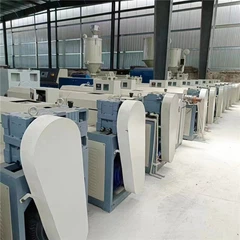
If you're looking for individual equipment, our Old Hdpe Pipe Equipment offers various parts and machines that can be integrated into your existing production line. We also have the 110 - 315mm HDPE Pipe Extruder, which is suitable for producing pipes within a specific diameter range.
Conclusion and Call to Action
Determining the minimum wall thickness of pipes that an Old HDPE Pipe Machine can produce is a complex process that depends on multiple factors, including machine design, material properties, and operator skill. While the typical range is between 1.5 mm and 2.5 mm, it's possible to optimize the production process to achieve better results.
If you're interested in purchasing an Old HDPE Pipe Machine or need more information about our products, we're here to assist you. Our team of experts can provide detailed guidance on choosing the right machine for your specific production requirements and help you understand how to maximize its performance. Contact us today to start a discussion about your pipe - making needs and explore how our machines can benefit your business.
References
- Plastics Pipe Institute. (2019). Handbook of Polyethylene Pipe.
- Modern Plastics Encyclopedia. (2020). Technical data on HDPE materials.
- Industry reports on the performance of old HDPE pipe machines from various manufacturers.