



Key Points for Mold Selection
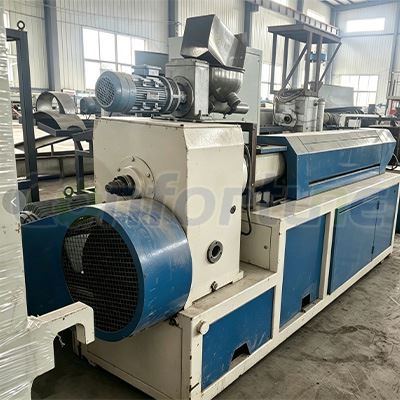
The mold is the core component of the forming process, and its selection should prioritize compatibility with the main machine and raw materials.
| Mold Types |
Applicable Raw Materials |
Structural Characteristics and Advantages |
Precautions |
|
PE Pipe Mold |
Polyethylene (PE) |
It adopts a spiral design to ensure uniform melt flow and low pressure loss, making it suitable for multi-layer co-extrusion applications. | Pay attention to the internal heating and thermostatic device of the mold to ensure the forming quality of large-diameter pipes. Check the chrome plating and polishing condition of the runner, as the surface finish directly affects the outer wall quality of the pipes. |
|
PVC Pipe Mold |
Polyvinyl Chloride (PVC) | A split-flow support die is commonly used, featuring low die pressure and excellent compatibility with shear-sensitive materials such as PVC. | Check the material of the sizing sleeve; stainless steel or copper options offer greater durability. Pay attention to the specific pipe types for which the mold is applicable, such as solid-wall, soundproof, and spiral-reinforced pipes. |
| PP-R Pipe Mold |
Polypropylene Random Copolymer |
It adopts a spiral structure and is often designed as a multi-diameter mold, meaning one set of molds can produce pipes with several similar outer diameters, thus reducing costs. | Confirm the specific implementation method of the "multi-diameter mold" (such as replacing modules) and check whether the relevant accessories are complete. |
|
General-Purpose Mold |
The mold connection dimensions (flange specifications) must be fully compatible with the head of the used extruder. | Inspect the actual wear condition, especially the wear and repair traces of key forming components such as the die and mandrel. |
Auxiliary Equipment Selection Guide
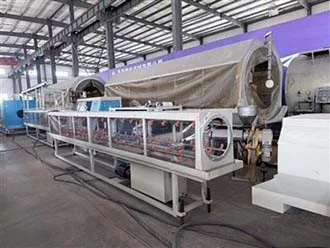
Auxiliary equipment is responsible for subsequent processes such as shaping, cooling, traction, and cutting, and its performance directly affects production efficiency and finished product quality.
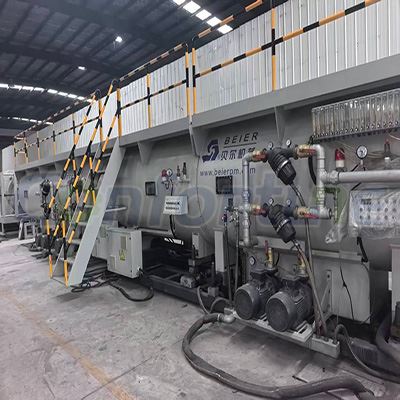
Function: Through vacuum sizing tank or internal pressure sizing method, the pipes obtain precise outer diameter and roundness, and undergo preliminary cooling.
Selection Inspection: Check whether the working condition of the vacuum pump or internal pressure air pump is good; verify the tightness of the water tank, the operation of water circulation and cooling system, and check for severe corrosion.
Function: It provides stable pulling force and is a key device for controlling uniform wall thickness and stable outer diameter of pipes.
Selection Inspection: Check whether the clamping method (such as crawler type) is suitable for the pipe diameter and surface requirements of the pipes you plan to produce. Verify whether the speed control system (such as frequency converter) is sensitive and stable, and the speed should be synchronously adjustable with the extrusion speed.
Function: It cuts continuously extruded pipes to the set length.
Selection Inspection: Check whether the cutting method (such as planetary cutting or saw cutting) is suitable for the pipe material and diameter. Verify whether the length measuring system is accurate and reliable. For large-diameter pipes, it is necessary to match sufficient cutting torque.
Feeding/Drying System: If producing hygroscopic raw materials (such as PA), check the dehumidification capacity of the used dryer.
Printing/Inkjet Coding Machine: Select and configure according to product standard requirements.
Material Turning/Stacking Rack: Configure according to production rhythm and site conditions to achieve semi-automation.