

PVC Door and Window Profile Extrusion Line: Complete Configuration Guide
PVC/UPVC door and window profiles are mainstream building decoration materials globally, favored for their heat insulation, waterproofing, anti-aging and cost-effective advantages. Theextrusion line configuration directly determines profile precision, surface quality, production efficiency and product service life.
Main Components of PVC Door Window Profile Extrusion Line
A complete UPVC profile extrusion line works as an automated system. Every unit must coordinate well. Poor matching will cause uneven wall thickness, rough surface or profile deformation.
| Equipment | Core Function | Key Features |
|---|---|---|
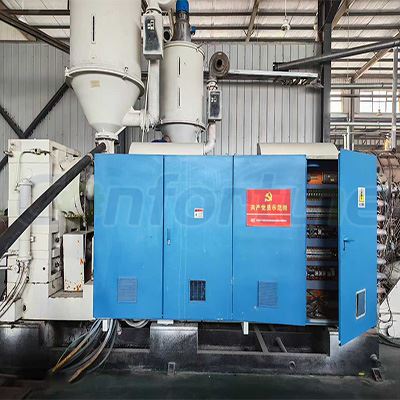
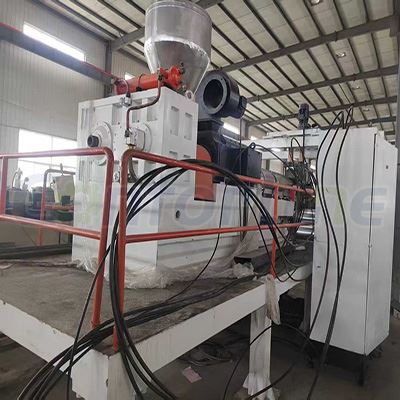
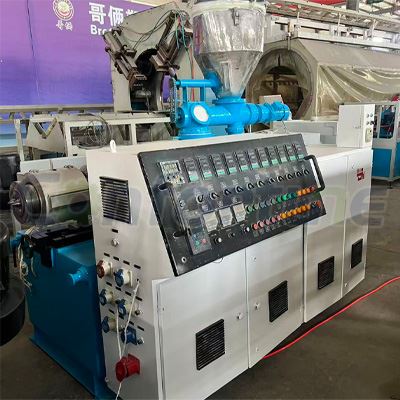
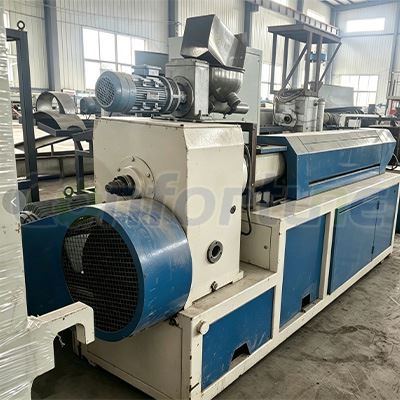
| Conical Twin-Screw Extruder | Melt and mix PVC dry blend, deliver steady extrusion pressure | Specially designed for rigid PVC. Common models: 55/110, 65/132, 80/156. Equipped with VFD speed control |
| Profile Extrusion Die | Form hollow multi-chamber door & window profile, control dimension tolerance | Custom-made per profile drawings. High-grade mold steel for long service life |
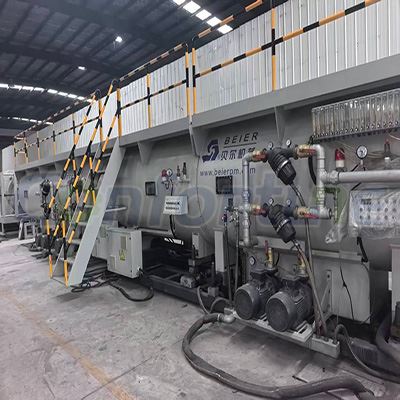
| Vacuum Calibration Table | Cool and shape hot extruded profiles to avoid warping | Multi-stage independent vacuum + circulating water cooling. Standard 6m length for stable shaping |
| Haul-off Machine | Pull profiles at constant speed, sync with extruder | Stepless speed regulation. Synchronized linkage prevents stretching or wrinkling |
| Cutting Machine | Cut profiles to fixed length with clean cuts | Planetary saw for burr-free cutting. Automatic length measuring |
| Automatic Stacker | Collect finished profiles automatically, cut labor cost | Auto counting & stacking, ideal for continuous mass production |
Small & Medium Production (New Factory / Custom Orders)
Best for small processing plants, flexible custom profile orders with limited investment.
- Extruder: 55/110 conical twin screw extruder, 22–37 KW motor
- Line setup: 6m vacuum calibration table + single-track haul-off + guillotine cutter
- Benefits: Lower power consumption, compact footprint, easy operation, quick mold change
- Suitable items: Normal window frames, simple door profiles, small auxiliary profiles
Mass Production (Large Building Material Factories)
For manufacturers with stable bulk orders, focusing on high yield and consistent quality.
- Extruder: 65/132 or 80/156 high output conical twin screw extruder, 45–55 KW
- Line setup: Multi-stage vacuum tank + dual-track haul-off + planetary saw + auto stacker
- Benefits: Higher output, stable precision, less waste, full automation, lower long-run labor cost
- Suitable items: Energy-saving multi-chamber UPVC door and window profiles
3 Critical Rules For High-Quality PVC Profile Production
Most common defects (warping, uneven wall thickness, poor surface, low weather resistance) come from improper line configuration. Keep these 3 points in mind:
Speed Synchronization Extruder screw speed, haul-off traction speed and vacuum cooling must run in sync. Speed mismatch creates internal stress and dimensional errors, profiles may deform after installation.
Graded Cooling & Calibration Premium lines use multi-level vacuum and water cooling. Sudden fast cooling leads to uneven shrinkage, reduces profile toughness and UV resistance.
Mold & Line Matching Die runner design should fit rigid PVC formulation and hollow profile structure. Multi-chamber profiles require matched high-precision calibration molds for uniform wall thickness.
Wrap Up
The key to selecting a PVC door and window profile extrusion line is right sizing, system coordination and customized configuration. A well-matched production line guarantees stable quality and high output, while minimizing maintenance and material waste. Whether you build a new plant or upgrade an old line, evaluate your production volume, product grade and local market demand before making the final decision.
FAQ
Q1: Why conical twin-screw extruder for rigid PVC profiles instead of parallel twin screw?
A: Rigid PVC is heat-sensitive and easy to degrade under excessive heat. Conical twin screw generates less shear heat and provides homogeneous mixing. It prevents PVC burning and keeps smooth profile surface. Parallel twin screw suits other non-heat-sensitive plastics.
Q2:What is the difference between planetary saw and guillotine cutter?
A: Planetary saw gives burr-free, neat cuts. Perfect for high-end window profiles that need welding and assembly. Guillotine cutter costs less but leaves minor burrs which require secondary trimming.
Q3: Can one extrusion line produce different door and window profiles?
A:Yes. By changing customized dies and adjusting process parameters, one line can make window frames, door frames, mullions and auxiliary profiles. Maximize machine utilization.