

PVC door and window profiles are core building materials for modern energy-saving, waterproof, and corrosion-resistant door and window systems. Their production process precision and strict quality control system directly determine the service life, structural stability, and overall performance of finished windows and doors. For global buyers, standardized manufacturing and rigorous QC standards are the key criteria to judge reliable PVC profile suppliers.
Overview of PVC Door & Window Profile Production Process
The manufacturing of high-quality PVC door and window profiles adopts mature twin-screw extrusion technology, with a full-process standardized operation from raw material preparation to finished product packaging. The entire production flow is divided into 6 core steps, each linked closely to avoid product defects such as deformation, color difference, and poor compactness.
1. Raw Material Proportioning & Mixing
High-quality PVC profiles start with scientific formula configuration. The main raw materials include PVC resin, calcium-zinc stabilizers, lubricants, fillers, UV-resistant pigments, and impact modifiers. All materials are weighed strictly according to the fixed proportion to ensure environmental protection, weather resistance and structural toughness of the profiles.
After proportioning, the materials enter a high-speed mixing unit for hot mixing and cold cooling treatment. This step fully homogenizes all additives, eliminates material agglomeration, and lays a foundation for stable extrusion molding. Differing from ordinary plastic products, door and window PVC profiles adopt low-plasticizer rigid formula to ensure structural hardness and dimensional stability.
2. Precision Extrusion Molding
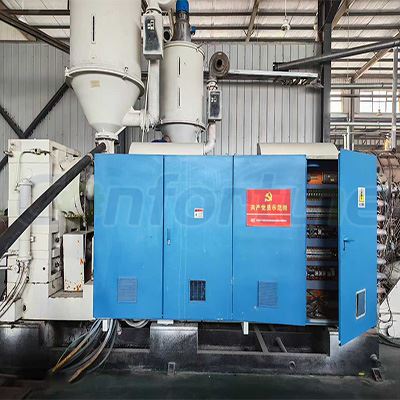
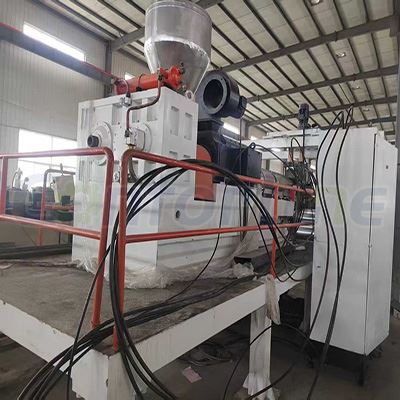
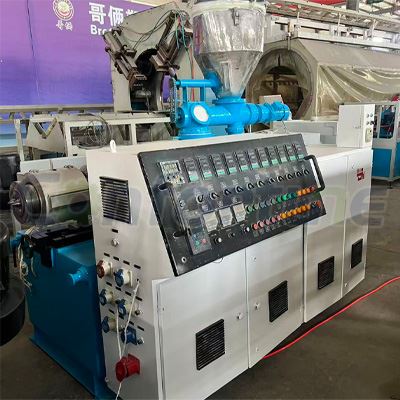
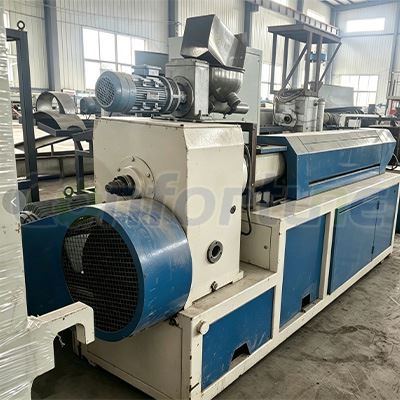
The homogenized dry-blend materials are conveyed to a conical twin-screw extruder, which is the core equipment of the production line. The equipment heats the materials to 170°C-200°C through segmented temperature control, and generates uniform shear force to melt and fuse the PVC materials completely without thermal degradation.
Under stable pressure (2000-3000 psi), the molten PVC materials pass through precision custom steel dies to form the standard cross-section of door and window profiles. The die precision directly determines the profile dimensional accuracy, and high-end production dies maintain ultra-high machining tolerances to ensure profile assembly consistency.
3. Vacuum Calibration & Water Cooling
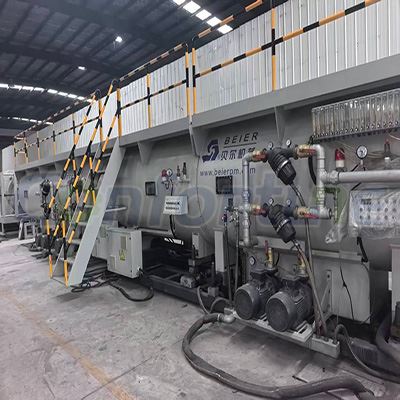
This is the most critical step to prevent profile deformation. The hot extruded profiles immediately enter the vacuum calibration unit, which uses stainless steel calibration parts to fix the profile shape by vacuum adsorption, ensuring accurate dimensional specification.
Subsequently, the profiles pass through a long water-cooling tank for gradual constant-temperature cooling. Slow cooling effectively eliminates internal stress, avoids warping, surface shrinkage and structural deformation, and guarantees the flatness and stability of finished profiles.
4. Traction & Fixed-Length Cutting
The cooled profiles are pulled forward at a constant speed by a dual-track traction machine. The traction speed is precisely matched with the extrusion speed to avoid profile stretching, compression or uneven wall thickness.
After stable traction, the automatic cutting equipment cuts the profiles according to customer-specified fixed lengths. The cutting section is smooth and burr-free, which meets the subsequent welding and assembly requirements of doors and windows.
5. Surface Finishing & Protection
The cut profiles go through surface inspection and finishing treatment, including removing minor blemishes and trimming edge corners. Finally, professional protective films are pasted on the profile surface to prevent scratches, dust and oxidation during transportation and storage.
6. Finished Product Sorting & Warehousing
All finished profiles are sorted manually and automatically, and qualified products are classified and warehoused according to specifications, colors and models, while defective products are marked and reprocessed uniformly.
Core Quality Control Standards & Inspection Items
Strict full-process quality control runs through the entire production of PVC door and window profiles, covering raw material incoming inspection, in-process production monitoring, and finished product sampling test, to ensure that all products meet international building material standards.
1. Raw Material Incoming QC
- Material qualification verification: Check the inspection reports of PVC resin, stabilizers and other additives to ensure all raw materials are environmentally friendly, non-toxic and meet EU and international building material standards.
- Formula consistency inspection: Randomly check the proportion of raw materials to avoid performance defects caused by formula deviation.
2. On-Line Production Monitoring
- Temperature & pressure real-time control: The extrusion temperature error is strictly controlled within ±2°C, and the extrusion and traction pressure are monitored in real time to ensure stable production parameters.
- Dimensional real-time detection: Regularly check profile wall thickness, width, height and other dimensions, with a tolerance control of ±0.2mm to ensure assembly accuracy.
- Surface quality inspection: Continuously observe the profile surface to eliminate defects such as bubbles, cracks, color difference, scratches and uneven gloss.
3. Finished Product Performance Testing
- Mechanical property test: Conduct impact resistance, tensile strength and flexural modulus tests to ensure the profiles can resist external impact and avoid cracking in long-term use.
- Weather resistance test: Simulate outdoor high temperature, low temperature and UV radiation environment to verify the profile's anti-aging, anti-fading and anti-deformation performance, suitable for global different climate regions.
- Sealing & stability test: Detect profile structural tightness and welding performance to ensure the assembled doors and windows have good waterproof and windproof performance.
4. Final Sampling & Shipment Inspection
Before shipment, special inspectors conduct random sampling of finished products. All indexes including appearance, size, performance and packaging are fully inspected. Products that meet the standards are allowed to be shipped, and unqualified products are completely rejected to ensure zero defective delivery.
Why Standard Production & Strict QC Matter for PVC Profiles?
High-standard production processes and perfect quality control systems are the core advantages of premium PVC door and window profiles. Standardized manufacturing ensures dimensional consistency, structural stability and long service life of profiles, while strict QC effectively avoids common problems such as profile fading, deformation, brittle cracking and poor assembly effect.
For overseas importers, custom PVC profiles with standardized production and complete quality inspection reports can perfectly adapt to local architectural engineering standards, reduce after-sales problems, and improve product market competitiveness.
Key Takeaways
The production of PVC door and window profiles is a systematic precision manufacturing project, relying on standardized raw material proportioning, stable extrusion molding, scientific cooling shaping and full-process quality monitoring. Strict quality control from raw materials to finished products is the fundamental guarantee for high-performance, durable and high-quality PVC door and window profile products.
Hot Tags: used profile machine equipment, China used profile machine equipment manufacturers, suppliers, profile extrusion machine used for stretch blowing, used profile extruder for crown molding, used profile extruder for lightweight profiles, profile extrusion machine used for heat resistant profiles, second hand profile extruder for fine profiles, used profile extruder for square profiles