

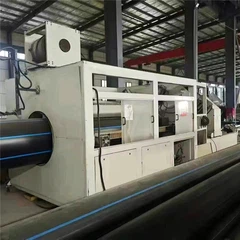
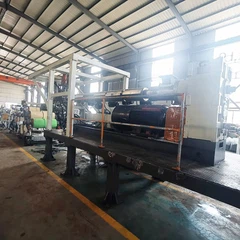
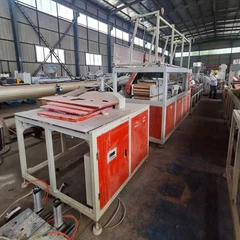
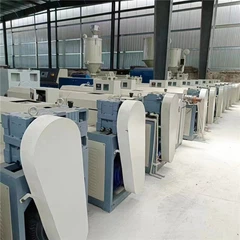

When dealing with the operation of a used HDPE pipe machine, one of the most critical aspects is its cooling system. As a supplier of used HDPE pipe machines, I've seen firsthand how a well - functioning cooling system can significantly impact the performance and longevity of these machines.
The Role of the Cooling System in a Used HDPE Pipe Machine
The cooling system in a used HDPE pipe machine plays a multifaceted role. Firstly, it is essential for maintaining the optimal temperature of the extruded HDPE material. HDPE (High - Density Polyethylene) is a thermoplastic polymer. During the extrusion process, the material is heated to a molten state to be shaped into pipes. However, if the temperature is not properly controlled during and after extrusion, it can lead to various issues.
For instance, if the HDPE cools too quickly, it may result in internal stresses within the pipe. These stresses can cause the pipe to crack or deform over time, reducing its quality and durability. On the other hand, if the cooling is too slow, the pipe may not hold its shape properly, leading to dimensional inaccuracies. The cooling system ensures that the HDPE cools at a controlled rate, allowing the pipe to achieve the desired mechanical properties and dimensions.
Secondly, the cooling system helps in protecting the machine's components. The extrusion process generates a significant amount of heat, which can damage the machine's mechanical parts, electrical systems, and bearings. By removing excess heat, the cooling system extends the lifespan of these components, reducing the frequency of maintenance and replacement.
Types of Cooling Systems in Used HDPE Pipe Machines
Water - Cooling Systems
Water - cooling systems are the most commonly used type in used HDPE pipe machines. These systems work by circulating water around the extruder barrel, die, and other heated components. The water absorbs the heat from these parts and then transfers it to a cooling tower or a heat exchanger.
There are two main types of water - cooling systems: open - loop and closed - loop. In an open - loop system, the water is drawn from a source such as a river, lake, or municipal water supply. After passing through the machine, the heated water is discharged back into the environment. This type of system is relatively simple and inexpensive to install. However, it requires a large amount of water and may face environmental regulations regarding water discharge.
Closed - loop water - cooling systems, on the other hand, recirculate the same water. The heated water is sent to a cooling tower, where it is cooled by evaporation and then pumped back into the machine. This system is more water - efficient and environmentally friendly. It also reduces the risk of scale and corrosion build - up in the machine's components, as the water can be treated with chemicals to prevent these issues.
Air - Cooling Systems
Air - cooling systems use fans to blow air over the heated components of the used HDPE pipe machine. The air absorbs the heat and carries it away from the machine. Air - cooling systems are generally simpler and less expensive than water - cooling systems. They do not require a water source, which makes them suitable for locations where water is scarce or expensive.
However, air - cooling systems have some limitations. They are less efficient in removing heat compared to water - cooling systems, especially in high - temperature environments. This can lead to longer cooling times and potentially lower production rates. Additionally, air - cooling systems may be noisier due to the operation of the fans.


Components of a Cooling System
Coolant Pumps
Coolant pumps are responsible for circulating the coolant (water or air) through the cooling system. In water - cooling systems, the pump ensures that the water flows at a constant rate through the extruder barrel, die, and other components. A reliable pump is crucial for maintaining a consistent cooling effect. Pumps come in different sizes and capacities, and the appropriate pump for a used HDPE pipe machine depends on the machine's size, production rate, and cooling requirements.
Heat Exchangers
Heat exchangers are used to transfer heat from the coolant to the environment. In water - cooling systems, a heat exchanger can be a shell - and - tube type or a plate - type. The hot water from the machine flows through one side of the heat exchanger, while a cooler fluid (such as air or cold water) flows through the other side. The heat is transferred from the hot water to the cooler fluid, cooling the water for recirculation.
Temperature Sensors
Temperature sensors are installed at various points in the cooling system and the machine to monitor the temperature. These sensors provide feedback to the machine's control system, which can then adjust the flow rate of the coolant or the operation of the cooling equipment to maintain the desired temperature. Accurate temperature sensors are essential for ensuring precise temperature control during the cooling process.
Maintenance of the Cooling System
Proper maintenance of the cooling system is vital for the efficient operation of a used HDPE pipe machine. For water - cooling systems, regular water treatment is necessary to prevent scale, corrosion, and the growth of algae and bacteria. Scale and corrosion can reduce the efficiency of the cooling system by blocking the flow of water and reducing heat transfer.
The coolant pumps, heat exchangers, and temperature sensors should also be inspected regularly for wear and tear. Any damaged or malfunctioning components should be replaced promptly. In air - cooling systems, the fans should be cleaned to remove dust and debris, which can reduce their efficiency.
Impact of the Cooling System on Production
The performance of the cooling system directly affects the production rate and quality of the HDPE pipes. A well - designed and maintained cooling system allows for faster cooling times, which in turn increases the production rate. This is because the pipes can be removed from the machine more quickly and moved on to the next stage of the production process.
In terms of quality, a proper cooling system ensures that the pipes have consistent dimensions and mechanical properties. This reduces the number of defective pipes, improving the overall yield of the production process.
Related Products
If you are interested in other used HDPE pipe machine - related products, we offer a range of options. You can check out our Old Hdpe Extrusion Device, Used PE Single Layer Pipe Production Line, and HDPE Second - hand Plastic Extruder Production Line.
Contact for Purchase and Negotiation
If you are in the market for a used HDPE pipe machine and want to learn more about its cooling system or other features, feel free to contact us. We are ready to have in - depth discussions about your specific requirements and provide you with the best solutions.
References
- "Plastics Extrusion Technology Handbook" by Allan A. Griff.
- "Extrusion of Polymers: Theory and Practice" by John Vlachopoulos.