

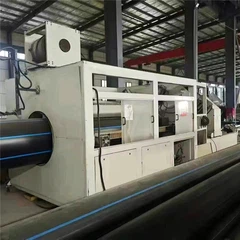
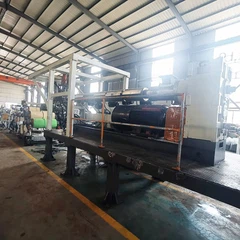
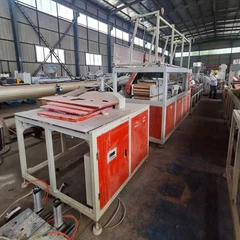
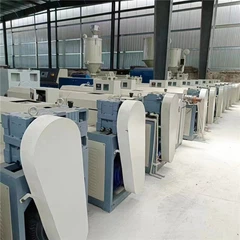

As a supplier of used pipe production lines, I've had the privilege of witnessing firsthand the intricate mechanisms that keep these systems running smoothly. One of the most critical components of any pipe production line is the cooling system. In this blog post, I'll delve into the details of what a cooling system in a used pipe production line is, its importance, and how it operates.
Understanding the Basics of a Cooling System
The cooling system in a used pipe production line plays a pivotal role in ensuring the quality and integrity of the pipes being manufactured. When raw materials are heated and extruded through a die to form pipes, they emerge at extremely high temperatures. Without proper cooling, the pipes would not solidify correctly, leading to issues such as warping, uneven wall thickness, and poor mechanical properties.
The primary function of the cooling system is to rapidly reduce the temperature of the newly formed pipes to a point where they can maintain their shape and structure. This is typically achieved through a combination of water cooling and air cooling methods.
Water Cooling in Pipe Production
Water cooling is the most common method used in pipe production lines. It involves passing the newly extruded pipes through a water bath or a series of water-cooled chambers. The water absorbs the heat from the pipes, causing them to cool and solidify.
There are two main types of water cooling systems: direct and indirect. In a direct water cooling system, the pipes come into direct contact with the cooling water. This method is highly efficient as it allows for rapid heat transfer. However, it can also introduce contaminants to the pipes if the water is not properly treated.
On the other hand, an indirect water cooling system uses a heat exchanger to transfer the heat from the pipes to the cooling water. This method is more expensive but offers better control over the cooling process and reduces the risk of contamination.
Air Cooling in Pipe Production
In addition to water cooling, air cooling is often used in conjunction with water cooling to further reduce the temperature of the pipes. Air cooling involves blowing ambient air or chilled air over the pipes to remove the remaining heat.
Air cooling is particularly useful for pipes with larger diameters or thicker walls, as it allows for more uniform cooling and reduces the risk of internal stresses. It can also be used as a pre-cooling step before the pipes enter the water cooling system to prevent thermal shock.
Components of a Cooling System
A typical cooling system in a used pipe production line consists of several key components, including:


- Water Tanks: These are used to store the cooling water and maintain a constant supply.
- Pumps: Pumps are responsible for circulating the cooling water through the system.
- Heat Exchangers: Heat exchangers transfer the heat from the pipes to the cooling water.
- Fans: Fans are used to blow air over the pipes for air cooling.
- Temperature Sensors: Temperature sensors are used to monitor the temperature of the pipes and the cooling water, allowing for precise control of the cooling process.
Importance of a Proper Cooling System
A properly functioning cooling system is essential for the production of high-quality pipes. Here are some of the key benefits of a well-designed cooling system:
- Improved Pipe Quality: By ensuring uniform cooling, a proper cooling system helps to prevent defects such as warping, cracking, and uneven wall thickness.
- Increased Production Efficiency: A faster cooling process allows for higher production speeds, reducing the overall manufacturing time and increasing productivity.
- Extended Equipment Lifespan: By reducing the stress on the pipes and the production equipment, a proper cooling system can help to extend the lifespan of the machinery.
- Energy Savings: An efficient cooling system can reduce energy consumption by minimizing the amount of water and electricity required for cooling.
Maintenance of a Cooling System
Regular maintenance of the cooling system is crucial to ensure its optimal performance and longevity. Here are some tips for maintaining a cooling system in a used pipe production line:
- Clean the Water Tanks and Pipes: Regularly clean the water tanks and pipes to prevent the buildup of sediment, algae, and other contaminants.
- Check the Water Quality: Monitor the water quality regularly and treat it as needed to prevent corrosion and scaling.
- Inspect the Pumps and Fans: Check the pumps and fans for any signs of wear or damage and replace them if necessary.
- Calibrate the Temperature Sensors: Calibrate the temperature sensors regularly to ensure accurate temperature readings.
- Lubricate Moving Parts: Lubricate the moving parts of the cooling system to reduce friction and wear.
Our Used Pipe Production Lines and Cooling Systems
At our company, we offer a wide range of used pipe production lines, including Second-hand PVC Pipe Extrusion Production Equipment, Used Pipe Extrusion Machine, and Second Hand HDPE Pipe Machine. Our production lines are equipped with state-of-the-art cooling systems that are designed to provide efficient and reliable cooling for a variety of pipe sizes and materials.
We understand the importance of a proper cooling system in pipe production, and we take great care to ensure that our used equipment is in excellent condition and fully functional. Our team of experts can also provide technical support and maintenance services to help you keep your cooling system running smoothly.
Conclusion
The cooling system is a critical component of any used pipe production line. It plays a vital role in ensuring the quality, efficiency, and longevity of the pipes being manufactured. By understanding the basics of a cooling system, its components, and its importance, you can make informed decisions when choosing a used pipe production line and ensure that it meets your specific needs.
If you're interested in learning more about our used pipe production lines or have any questions about cooling systems, please don't hesitate to contact us. We're here to help you find the right solution for your pipe manufacturing needs.
References
- "Pipe Extrusion Technology" by John A. Malloy
- "Plastics Extrusion: Principles and Practice" by John A. Brydson