

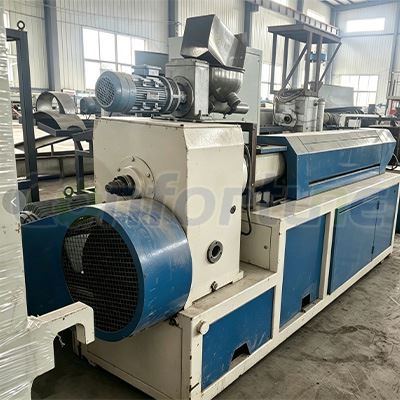
Hey there! As a supplier of second - hand extruders, I often get asked about the processing accuracy of these machines. So, let's dive right into it and figure out what the deal is with the processing accuracy of a second - hand extruder.
First off, what is processing accuracy? Well, in the context of an extruder, it refers to how precisely the machine can control and produce the desired output. This includes factors like the consistency of the extruded product's dimensions, the uniformity of its properties, and how well it adheres to the set parameters.
When it comes to second - hand extruders, the processing accuracy can vary quite a bit. There are several factors that influence this. One of the most important ones is the age and condition of the machine. Older extruders might have more wear and tear on their components. For example, the screws inside the extruder, which play a crucial role in pushing and mixing the material, can get worn over time. This wear can lead to inconsistent feeding of the material, which in turn affects the accuracy of the final product.


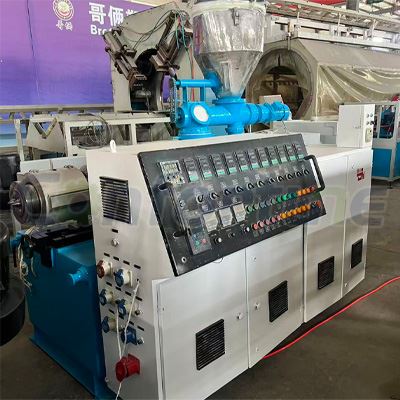
The type of extruder also matters. There are single - screw extruders, twin - screw extruders, and other types. Each has its own characteristics when it comes to processing accuracy. Twin - screw extruders, for instance, are generally better at mixing materials evenly. This can result in a more consistent product, which means higher processing accuracy. If you're interested in a twin - screw option, check out our Used Conical Twin Screw Extruder.
Another factor is the maintenance history of the second - hand extruder. A well - maintained machine is more likely to have better processing accuracy. If the previous owner took good care of the extruder, regularly serviced it, and replaced worn parts in a timely manner, the machine will perform better. On the other hand, if the machine has been neglected, it might have issues with accuracy.
The materials being processed also impact the processing accuracy. Different materials have different properties, such as viscosity, melting point, and flow behavior. Some materials are easier to process accurately than others. For example, a material with a high viscosity might be more difficult to extrude with precision compared to a low - viscosity material. The extruder needs to be adjusted accordingly to ensure the best possible accuracy.
Now, let's talk about how to measure the processing accuracy of a second - hand extruder. One common way is to look at the dimensional accuracy of the extruded product. You can measure the diameter, thickness, or other relevant dimensions of the extruded item and compare them to the desired specifications. If the measurements are within a small tolerance range, then the extruder has good processing accuracy.
Another aspect is the quality of the surface finish of the extruded product. A smooth and uniform surface indicates better processing accuracy. Any irregularities or defects on the surface could be a sign of problems with the extruder's performance.
We also need to consider the speed of the extruder. The speed at which the material is extruded can affect the accuracy. If the speed is too high, the material might not be properly mixed or shaped, leading to inaccuracies. On the other hand, if the speed is too low, it can be time - consuming and might also cause issues with the consistency of the product.
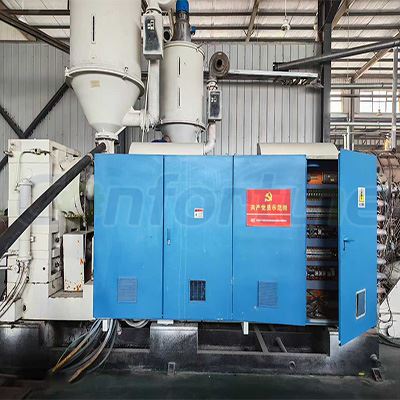
When it comes to our second - hand extruders, we take steps to ensure that they offer good processing accuracy. We thoroughly inspect each machine before putting it up for sale. Our technicians check the mechanical components, the electrical systems, and run test extrusions to evaluate the performance. This way, we can provide our customers with reliable machines that can meet their processing needs.
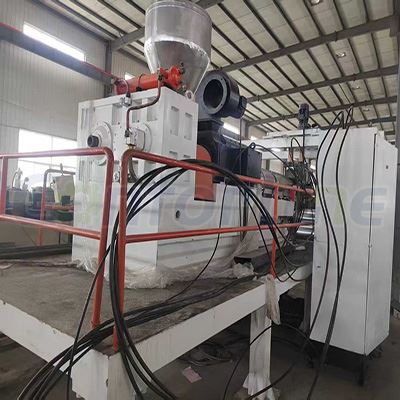
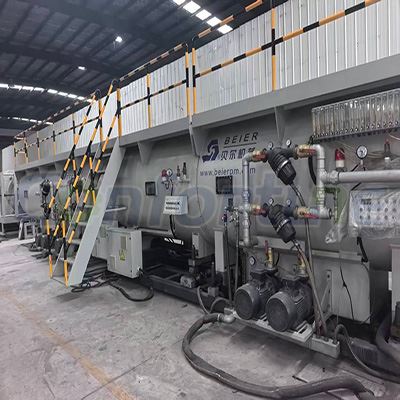
If you're in the market for a second - hand extruder, we have a great selection. For example, our Used 80/156 Extruder is a popular choice. It has been carefully inspected and is ready to deliver accurate processing results. And if you're looking for a general second - hand extruder machine, check out our Second Hand Extruder Machine.
In conclusion, the processing accuracy of a second - hand extruder depends on multiple factors, including the age, type, maintenance, and the materials being processed. But with proper inspection and selection, you can find a second - hand extruder that offers high - quality processing accuracy.
If you're interested in learning more about our second - hand extruders or have any questions about processing accuracy, don't hesitate to get in touch. We're here to help you make the right choice for your business.
References:
- Industry knowledge and experience in the second - hand extruder field.
- Technical manuals and specifications of extruder machines.