

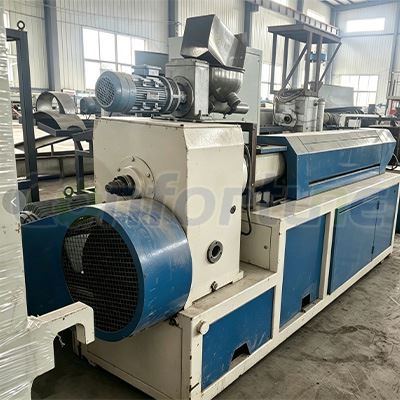
Hey there! As a supplier of used plastic pipe extruders, I often get asked about the torque of these machines. So, I thought I'd take a moment to break it down for you.
First off, let's talk about what torque actually is. In simple terms, torque is the rotational force that causes an object to turn. When it comes to a plastic pipe extruder, torque is crucial because it determines the machine's ability to push the plastic material through the extrusion process. Think of it like trying to turn a stubborn bolt. The more force (torque) you can apply, the easier it is to get that bolt moving.


In the context of a used plastic pipe extruder, the torque plays a vital role in several key areas. One of the most important is the melting and mixing of the plastic resin. When the plastic pellets are fed into the extruder, they need to be heated and melted into a homogeneous mass. The torque of the extruder's screw helps to apply the necessary pressure and shear force to break down the pellets and ensure a uniform melt. A higher torque means that the extruder can handle more viscous plastics and process them more efficiently.
Another area where torque matters is in the extrusion of the pipe itself. Once the plastic is melted, it needs to be forced through a die to form the desired shape of the pipe. The torque of the extruder's drive system is responsible for pushing the molten plastic through the die at a consistent rate. If the torque is too low, the plastic may not flow smoothly, resulting in uneven wall thickness or other defects in the pipe. On the other hand, if the torque is too high, it can put excessive stress on the machine and lead to premature wear and tear.
So, how do you determine the right torque for a used plastic pipe extruder? Well, it depends on a few factors. The first is the type of plastic you'll be processing. Different plastics have different viscosities, which means they require different levels of torque to be extruded effectively. For example, high-density polyethylene (HDPE) is a relatively viscous plastic, so it typically requires a higher torque extruder compared to a lower-viscosity plastic like polyvinyl chloride (PVC).
The size and diameter of the pipe you want to produce also play a role in determining the required torque. Larger pipes generally require more force to extrude, so you'll need an extruder with a higher torque rating. Additionally, the production rate you're aiming for will affect the torque requirements. If you need to produce a large volume of pipes in a short period of time, you'll need an extruder that can handle the increased load.
When looking at used plastic pipe extruders, it's important to check the specifications of the machine to see what its torque rating is. This information is usually provided by the manufacturer and can give you a good idea of the machine's capabilities. However, keep in mind that the actual torque output may vary depending on the condition of the machine and how well it has been maintained.
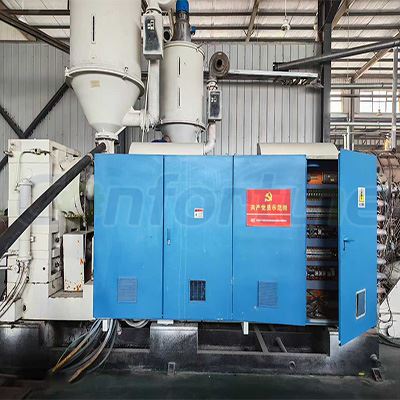
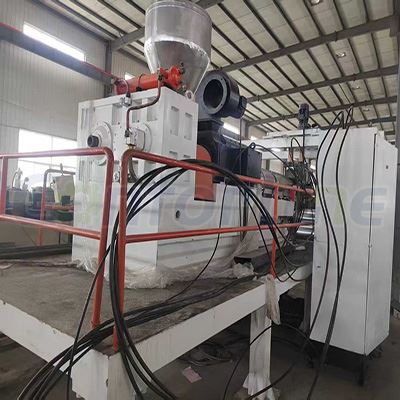
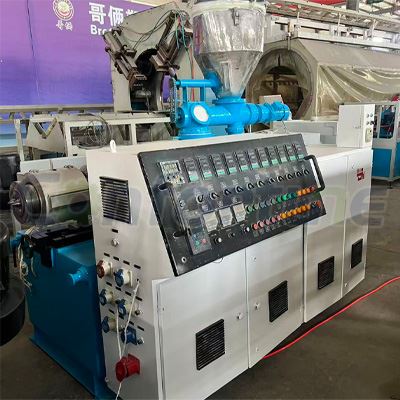
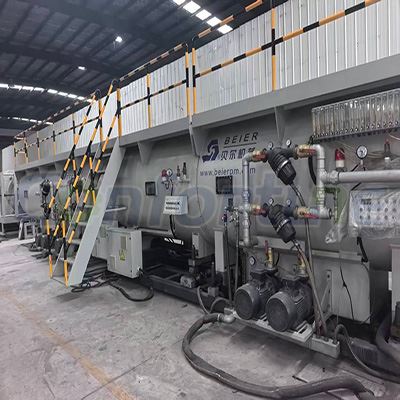
At our company, we offer a wide range of Second-hand /Used PE Pipe, Second-hand Pipe Extruder Equipment, and Used Pipe Extruder Production Line. We carefully inspect each machine to ensure that it is in good working condition and that the torque rating is appropriate for your needs. Our team of experts can also provide you with guidance on selecting the right extruder for your specific application.
If you're in the market for a used plastic pipe extruder, don't just focus on the price. Make sure you understand the importance of torque and how it can impact the performance of the machine. By choosing an extruder with the right torque rating, you can ensure that you get high-quality pipes and maximize the efficiency of your production process.
So, if you're interested in learning more about our used plastic pipe extruders or have any questions about torque or other aspects of the extrusion process, don't hesitate to get in touch. We're here to help you find the perfect solution for your business.
References
- "Plastics Extrusion Technology" by John A. Brydson
- "Handbook of Plastic Pipe Systems" edited by Hans Zweifel