

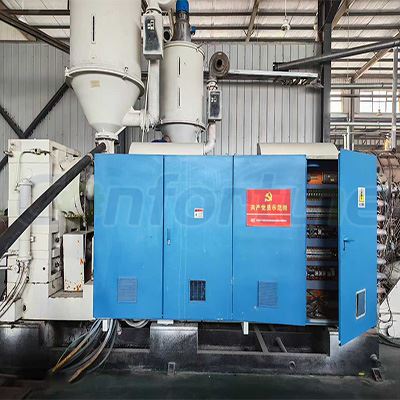
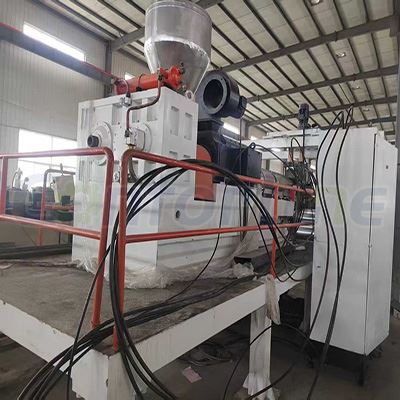
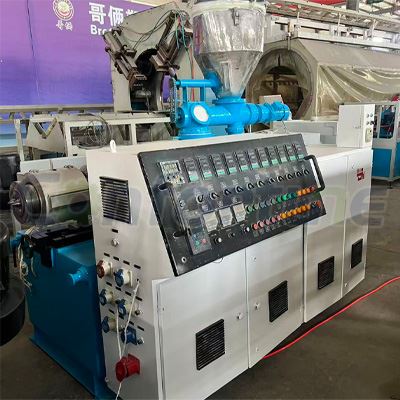
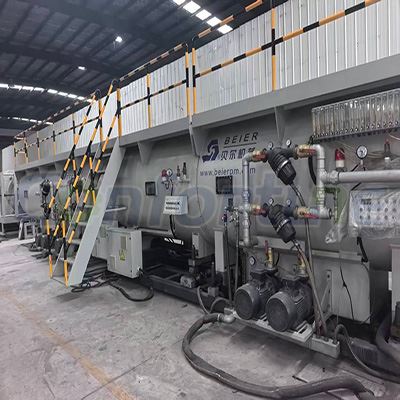
PS sheet extrusion is widely used for packaging, stationery, thermoforming and disposable products. Many factory owners struggle with unstable throughput, frequent shutdowns, uneven sheet thickness and high scrap rate. Higher extrusion efficiency does not simply mean running faster. It balances stable plastification, consistent melt pressure, smooth cooling and less unplanned stop time.
✅ 1. Optimize Raw Material Feeding & Formula
Feeding fluctuation is one top hidden reason for low efficiency.
- Check hopper bridging. PS pellets may arch and stop feeding. Add vibrator or forced feeder if needed.
- Keep regrind size uniform. Online edge trim recycling saves material and reduces waste handling time. Do not add too much irregular regrind at once.
- Match PS resin MFR. Select proper melt flow grade. Too high viscosity raises backpressure and limits output.
✅ 2. Tune Barrel Temperature & Screw Plasticizing
PS is amorphous polystyrene, sensitive to overheating and thermal degradation.
- Set a reasonable temperature profile zone by zone. Avoid overheating in feeding section, which leads to premature melting and feeding block.
- Upgrade to barrier screw with good mixing section. It improves plasticizing capacity under higher screw speed without burning PS.
- Keep temperature sensors calibrated regularly. Wrong temperature reading causes repeated adjustment and waste runs.
✅ 3. Stabilize Melt Pressure with Melt Pump & Screen Changer
- Pressure swing brings thickness variation, so you have to slow down the line frequently.
- A melt pump between extruder and die stabilizes die inlet pressure greatly. It separates screw pulsation from die flow, allowing steady higher speed.
- Use continuous screen changer instead of manual screen change. It cuts stop time during screen blocking.
✅ 4. Die & Calender Cooling System Upgrade
After the die, cooling speed decides your maximum stable line speed for PS sheet.
- Balance die lip temperature, keep die gap clean and evenly adjusted. Dirty die lips cause streaks and frequent cleaning stops.
- Upgrade chill roll cooling capacity. Poor heat exchange limits line speed, even if extruder can push more melt out.
- Keep all drive motors synchronized. Screw, haul-off, calender and winder speed mismatch creates stretching and thickness defects.
✅ 5. Reduce Downtime via Standard Maintenance & Operation
Many efficiency losses come from unplanned stops.
- Make a fixed maintenance checklist: screw & barrel wear check, roll parallelism, bearing lubrication, sealing inspection.
- Standardize purging procedure when switching color or material. Good purging shortens changeover time and reduces scrap during transition.
- Record each production run: material grade, temperature, pressure, line speed, scrap ratio. Operators can quickly refer to proven parameters.
Improving PS sheet extrusion efficiency is a continuous optimization job. Stable feeding, precise temperature control, steady melt pressure and reliable cooling system work together. Reasonable operation standard and routine maintenance help you run the line longer, produce qualified PS sheets at higher speed and lower cost.
Hot Tags: double stage granules making machine, China double stage granules making machine manufacturers, suppliers, second hand plastic granules molding apparatus, recycled plastic granules molding unit, used granules processing machine, recycled granules compressing device, recycled granules drying device, recycled plastic granules crushing unit
FAQ
Q: Can I raise screw speed directly to get higher PS sheet output?
A: Not recommended. If plasticizing, cooling and die flow cannot follow up, faster screw only brings burning, bad flatness and more waste. Efficiency improvement is system tuning.
Q: Which upgrade gives the fastest return for old PS sheet line?
A: Most customers get obvious gain from melt pump + continuous screen changer, then chill roll renovation.