

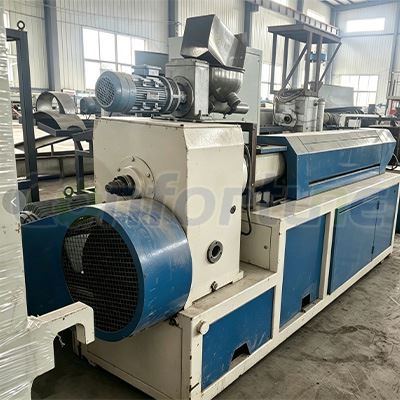
Main factors that drag down used pelletizer performance
Old machines usually lose efficiency not only from worn parts. Most bottlenecks come from mixed problems:
- Dirty, wet, poorly sorted plastic waste feeding into the extruder
- Worn screw, barrel, die head and dull cutting blades
- Unstable feeding, bridging in hopper, overfeeding or starvation
- Outdated motor without VFD, constant high power waste
- Wrong temperature & screw speed setting for your plastic material
- Irregular cleaning, blocked screen changers and poor cooling
Practical ways to boost used plastic pelletizer efficiency
1. Pre-treat raw materials first
Raw material quality decides 40% of pelletizing stability.
- Sort different plastic types (PE, PP, PET, ABS) separately; mixed resins cause poor melting and frequent die blockage
- Remove sand, metal, paper and heavy contaminants before feeding
- Dry wet film/flakes well. Moisture leads to bubbles, vacuum vent surging and more screen changes
- Compact loose film with a compactor to keep feeding continuous
2. Check & renew worn core parts
On used pelletizers, screw and barrel wear is the biggest hidden loss.
- Inspect screw flight, barrel liner. If wear is serious, repair or re-sleeve the screw
- Sharpen or replace pelletizer blades regularly; keep correct blade gap. Dull blades make more fines and raise power use
- Clean or replace die plate holes, remove carbon buildup; blocked holes create lumpy pellets and pressure fluctuation
- Check seals, bearings and gearbox oil. Leaks and abnormal vibration stop production suddenly
3. Optimize feeding & process parameters
-
Install a stable feeder (volumetric / gravimetric feeder) instead of manual feeding, avoid feeding surge
- Adjust barrel temperature according to plastic grade. Do not overheat, it wastes electricity and degrades plastic
- Match screw speed and melt pressure. Higher speed does not always mean higher output; over-speed causes incomplete plasticization
- Keep vacuum degassing working properly to remove volatile substances
4. Low-cost electrical upgrade for old pelletizers
Many second-hand pelletizers run with fixed-speed motors.
- Add VFD (variable frequency drive) for main motor and feeder motor. It adjusts power based on real load and saves energy
- Replace old heating rings with energy-saving heating elements if budget allows
- Check wiring and contactors; loose connections cause unstable running
5. Build a simple preventive maintenance schedule
|
Item |
Frequency |
Purpose |
|---|---|---|
| Clean die head & screen | Every shift | Prevent blockage |
| Check blade sharpness & gap | Every 200–300 working hours | Keep clean cutting |
| Gearbox oil change | Monthly | Reduce gear wear |
| Full machine cleaning & carbon removal | Every 1–2 months | Avoid material coking |
Efficiency improvement is a balance of throughput, pellet quality and energy cost. If your used plastic pelletizer has limited screw design, you can also upgrade single parts step by step instead of buying a brand-new line.
Hot Tags: second-hand plastic granulation machine, China second-hand plastic granulation machine manufacturers, suppliers, second hand plastic granules recycling apparatus, used plastic granules molding machine, second hand plastic granules shaping apparatus, recycled plastic granules granulating unit, second hand granules pelletizing equipment, recycled plastic granules recycling unit