

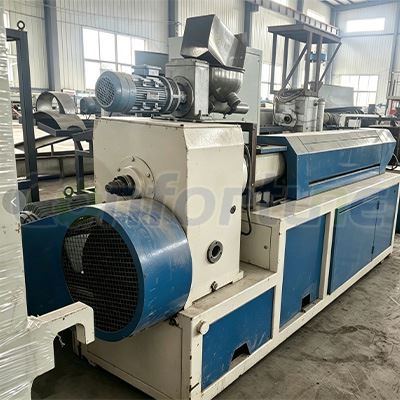
Key Factors Affecting Plastic Pelletizer Output and Production Efficiency
Many recyclers and plastic processors find that the same model of plastic pelletizer delivers very different hourly output. The rated capacity on the brochure is only a reference value. Real production efficiency depends on multiple linked factors. Understanding these points helps you reduce downtime, cut energy cost and get stable pellet quality.
1. Raw Material Properties (The Most Easy-to-Ignore Factor)
✅ Bulk density: Loose film flakes have low bulk density and are hard to feed steadily. Rigid regrind (PP/HDPE lumps) feeds much smoother and supports higher throughput.
✅ Moisture and contamination: High moisture causes bubbles, degassing pressure fluctuation and frequent screen blockage. Dirt, paper and foreign objects force more screen changes and unexpected stops.
✅ Material type & MFI: PE, PP, PET, PVC and filled compounds have different melt viscosity. One pelletizer cannot run all materials at its maximum rated speed.
2. Machine Design & Core Component Matching
- Screw and barrel structure: L/D ratio, screw flight design and wear-resistant treatment decide plasticizing stability. Poor plasticizing leads to unstable melt pressure and limits output.
- Filtration system: Continuous screen changer or double-piston screen changer is better than manual screen changing for long-run recycling lines. It avoids frequent shutdowns.
- Melt pump option: A melt pump stabilizes die pressure, reduces extruder surge and helps maintain consistent pellet size at high speed.
- Cutting system: Strand cutting, underwater cutting and hot face cutting fit different materials. Unmatched cutter speed will create fines, long tails or uneven pellets.
3. Feeding & Auxiliary System Coordination
Stable feeding = stable output. Gravimetric feeding is more reliable than simple volumetric feeding, especially for mixed recycled materials. If feeding speed jumps up and down, the whole extrusion line will keep adjusting and cannot run at full load. Cooling water temperature, water flow and air drying also matter. Poor cooling slows down the cutting section and becomes the bottleneck of the whole line.
4. Process Parameters & Operation Settings
Temperature zone setting, screw speed, vacuum degassing level and cutter RPM must match each other. A common mistake: blindly raising screw speed to chase higher output. It may cause over-shearing, material degradation, more fines and higher reject rate. Higher speed does not always mean higher effective efficiency.
5. Maintenance, Wear Parts & Automation
Screw, barrel, die plate and cutter blades wear gradually. Worn parts reduce plasticizing ability and raise power consumption year by year. PLC automatic control with closed-loop adjustment can synchronize feeding, extrusion and cutting. It lowers manual operation error and improves OEE (overall equipment effectiveness).
FAQ
Q: Why my pelletizer cannot reach the rated kg/h?
A: Check raw material bulk density, moisture content, screen clog frequency and whether feeding is continuous first. Most capacity gaps come from unstable feedstock, not machine quality.
Q: How to lift efficiency without buying a new line?
A: Upgrade feeding system, add continuous screen changer, optimize temperature curve and replace worn screw parts.
Final Tip
When you inquire or compare plastic pelletizing lines, do not only ask for the maximum output. Tell suppliers your raw material (film / rigid regrind / mixed plastic), moisture level and required pellet quality. Then you will get a practical, sustainable production solution.
Hot Tags: used flat and double granulation equipment, China used flat and double granulation equipment manufacturers, suppliers, used granules screening machine, recycled plastic granules refining unit, second hand plastic granules granulating apparatus, second hand polymer granules making equipment, used plastic granules filtering machine, recycled plastic granules cutting unit