


Hey there! As a supplier of second - hand extruders, I've gotten a ton of questions about the feeding accuracy of different second - hand extruders. And let me tell you, it's a topic that's super important for anyone in the business.
First off, what is feeding accuracy? It's all about how precisely an extruder can deliver the right amount of raw material into the extrusion process. This is crucial because it directly impacts the quality and consistency of the final product. If the feeding is off, you could end up with products that have inconsistent dimensions, poor physical properties, or other quality issues.
Now, let's talk about the differences in feeding accuracy between different second - hand extruders. There are several factors that can influence this, and I'll break them down for you.
1. Age and Condition of the Extruder
The age of a second - hand extruder plays a big role in its feeding accuracy. Older machines may have worn - out components, such as the feeding screw or the hopper. For example, if the screw has been used for a long time, it might have some wear and tear on its threads. This can lead to inconsistent material flow, as the screw won't be able to push the material through the extruder at a steady rate.
On the other hand, a relatively newer second - hand extruder that has been well - maintained is more likely to have better feeding accuracy. The components are in better condition, and they can perform their functions more precisely.
2. Type of Extruder
There are different types of second - hand extruders, like single - screw extruders and twin - screw extruders. Each type has its own characteristics when it comes to feeding accuracy.


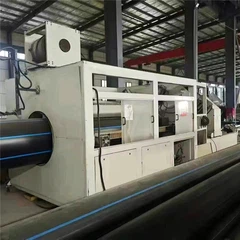
Single - screw extruders are simpler in design. They use a single screw to move the material through the barrel. The feeding accuracy of a single - screw extruder can be affected by the screw's design and the material properties. For instance, if the material is very viscous, it might be more difficult for the single screw to feed it consistently. You can check out our Used 45mm Single Screw Extruder to see one of these in action.
Twin - screw extruders, on the other hand, have two screws that work together. They offer better mixing and feeding accuracy in many cases. The two screws can provide more control over the material flow, especially for complex materials. They can handle a wider range of materials and can often achieve more consistent feeding.
3. Feeding System Design
The design of the feeding system is another key factor. Some second - hand extruders come with advanced feeding systems that use weigh - based or volumetric feeding methods.
Weigh - based feeding systems are more accurate because they measure the weight of the material being fed. This allows for precise control over the amount of material entering the extruder. Volumetric feeding systems, on the other hand, measure the volume of the material. While they are simpler and less expensive, they may not be as accurate as weigh - based systems, especially when dealing with materials that have varying densities.
4. Material Properties
The properties of the material being fed into the extruder also affect the feeding accuracy. Materials with different viscosities, particle sizes, and moisture contents can behave differently in the extruder. For example, a material with a high moisture content might clump together, making it difficult to feed evenly. A material with large particles might require a different feeding mechanism compared to a fine - powder material.
Real - World Examples
Let's say you're in the business of making plastic pipes. You're considering two different second - hand extruders. One is an older single - screw extruder with a basic volumetric feeding system, and the other is a newer twin - screw extruder with a weigh - based feeding system.
The older single - screw extruder might have some issues with feeding accuracy. If the material has a slightly different density or moisture content from batch to batch, the volumetric feeding system might not be able to adjust quickly enough. This could result in pipes with inconsistent wall thickness or other quality problems.
On the other hand, the newer twin - screw extruder with the weigh - based feeding system can handle these variations better. It can adjust the feeding rate based on the weight of the material, ensuring a more consistent product.
How to Improve Feeding Accuracy
If you're using a second - hand extruder and want to improve its feeding accuracy, here are some tips:
- Regular maintenance: Keep the extruder in good condition by cleaning and lubricating the components regularly. Replace any worn - out parts as soon as possible.
- Calibration: Calibrate the feeding system regularly to ensure accurate measurements. This is especially important for weigh - based feeding systems.
- Material handling: Store and handle the materials properly to prevent clumping or contamination. Make sure the material is in a consistent state before feeding it into the extruder.
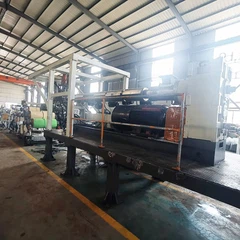
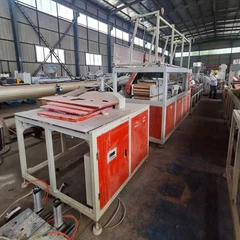
As a supplier of Used Extruder Machine, we understand the importance of feeding accuracy. We carefully inspect and test all our second - hand extruders to ensure they meet high standards. We also offer a variety of options, including Second Hand PVC Extruder Machine, to meet different customer needs.
If you're in the market for a second - hand extruder and want to learn more about feeding accuracy or other aspects of these machines, don't hesitate to reach out. We're here to help you make the right choice for your business. Whether you're a small - scale operation or a large - scale manufacturer, we have the expertise and the equipment to support you.
References
- "Extrusion Technology for Polymers" by Miles A. Collyer and David W. Clegg
- "Plastics Extrusion Technology" by Allan A. Griff
- Industry reports on second - hand extruder performance and feeding accuracy.