

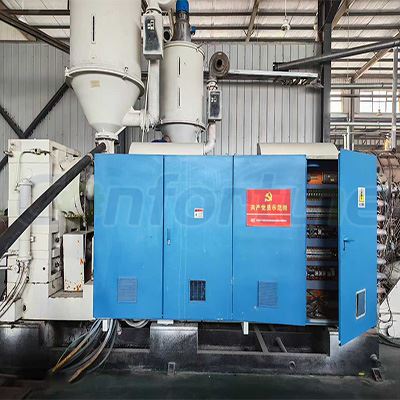
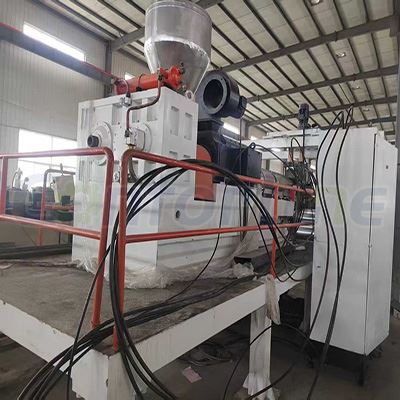
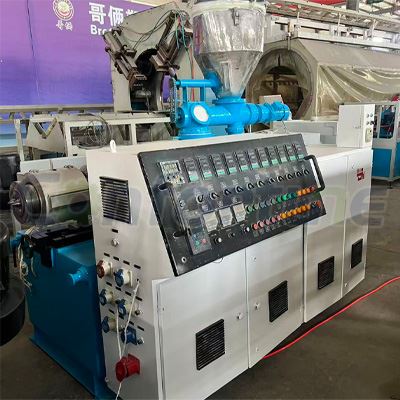
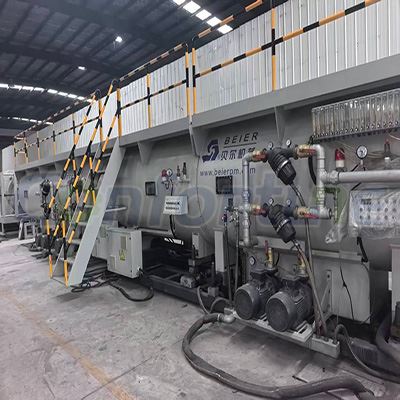
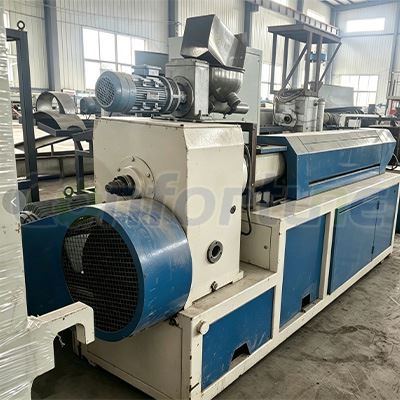
In the manufacturing industry, the surface finish of profiles is a critical factor that significantly influences the quality, aesthetics, and marketability of the final products. As a supplier of used profile production lines, I understand the importance of achieving an excellent surface finish for our customers. In this blog post, I will share some practical strategies and insights on how to improve the surface finish of profiles produced by a used profile production line.
Understanding the Basics of Surface Finish
Before delving into the improvement methods, it is essential to understand what surface finish means. Surface finish refers to the texture and quality of the surface of a profile. It is typically characterized by parameters such as roughness, waviness, and lay. A smooth and uniform surface finish not only enhances the visual appeal of the profile but also improves its functionality, such as reducing friction and wear.
The surface finish of profiles is affected by various factors, including the raw materials, processing parameters, and the condition of the production equipment. In the case of a used profile production line, the equipment's age and wear may pose additional challenges to achieving a high - quality surface finish. However, with the right approach, these challenges can be overcome.
Selecting the Right Raw Materials
The quality and properties of the raw materials used in profile production have a direct impact on the surface finish. For instance, if the raw plastic material contains impurities or has inconsistent particle sizes, it can lead to surface defects on the profiles.
- Material Purity: Ensure that the raw materials are of high purity. Conduct thorough quality checks on the incoming materials to detect and remove any contaminants. This can involve using filtration systems during the material handling process to filter out foreign particles.
- Material Homogeneity: Homogeneous raw materials are crucial for a smooth surface finish. Use blending equipment to mix the materials evenly before extrusion. This helps to ensure that the material properties are consistent throughout the profile production process.
Optimizing Processing Parameters
The processing parameters of the profile production line, such as temperature, pressure, and speed, play a vital role in determining the surface finish of the profiles.
- Temperature Control: Maintaining the correct temperature is essential for proper material flow and melting. In the extrusion process, if the temperature is too low, the material may not melt completely, resulting in a rough surface. On the other hand, if the temperature is too high, the material may degrade, causing discoloration and surface defects. Use temperature sensors and controllers to monitor and adjust the temperature accurately at different stages of the production line.
- Pressure Regulation: Adequate pressure is required to ensure that the material fills the mold cavity evenly and forms a smooth surface. However, excessive pressure can cause flash and other surface irregularities. Adjust the pressure settings based on the type of material and the profile design. Regularly check the pressure gauges and make necessary adjustments to maintain a stable pressure throughout the production process.
- Extrusion Speed: The extrusion speed affects the cooling rate and the flow of the material. A too - high extrusion speed may not allow sufficient time for the material to cool and solidify properly, resulting in a rough surface. Conversely, a very low extrusion speed can be inefficient and may also cause surface defects due to prolonged exposure to heat. Find the optimal extrusion speed through trial and error, considering the material properties and the profile dimensions.
Maintaining the Production Equipment
Since we are dealing with used profile production lines, proper equipment maintenance is crucial for achieving a good surface finish.
- Cleaning and Lubrication: Regularly clean the extrusion barrels, screws, and dies to remove any accumulated material residues. These residues can cause surface scratches and other defects on the profiles. Additionally, ensure that all moving parts of the production line are properly lubricated to reduce friction and wear, which can also affect the surface quality of the profiles.
- Die Maintenance: The die is a critical component that directly shapes the profile. Over time, the die may wear out or become clogged, leading to surface imperfections. Inspect the die regularly for signs of wear and damage. If necessary, repair or replace the die. Also, clean the die channels to ensure a smooth flow of material.
- Calibration and Alignment: Proper calibration and alignment of the production line equipment are essential for consistent profile quality. Misaligned components can cause uneven material flow and result in surface defects. Regularly check and calibrate the alignment of the extruder, puller, and cutter to ensure that the profiles are produced with the correct dimensions and a smooth surface.
Post - Processing Treatments
In some cases, post - processing treatments can be used to further improve the surface finish of the profiles.
- Polishing: Polishing is a common post - processing method for enhancing the surface smoothness of profiles. It involves using abrasive materials to remove surface irregularities and create a shiny finish. Different polishing techniques, such as mechanical polishing, chemical polishing, or electro - polishing, can be selected based on the material and the desired surface quality.
- Coating: Applying a coating to the profile surface can not only improve the surface finish but also provide additional protection against corrosion, abrasion, and UV radiation. There are various types of coatings available, such as paint, powder coating, and film lamination. Choose the coating method and material according to the specific requirements of the profiles.
Utilizing Advanced Technologies
In today's manufacturing landscape, advanced technologies can offer significant advantages in improving the surface finish of profiles.
- Automated Quality Control Systems: Implement automated quality control systems, such as vision inspection systems, to detect and classify surface defects in real - time. These systems can quickly identify issues such as scratches, pits, and color variations, allowing for immediate corrective actions to be taken.
- Simulation Software: Use simulation software to optimize the extrusion process before actual production. The software can predict the material flow, temperature distribution, and pressure changes during extrusion, helping to identify potential problems and optimize the processing parameters to achieve a better surface finish.
Conclusion
Improving the surface finish of profiles produced by a used profile production line requires a comprehensive approach that encompasses raw material selection, processing parameter optimization, equipment maintenance, post - processing treatments, and the utilization of advanced technologies. As a supplier of used profile production lines, we are committed to providing our customers with the necessary support and guidance to help them achieve the best possible surface finish for their profiles.
If you are interested in our Profile Line Machine, Wpvc Profile Line, or PVC Profile Line2, or if you have any questions about improving the surface finish of profiles, please feel free to contact us for further discussion and procurement negotiation. We look forward to working with you to achieve your manufacturing goals.


References
- Smith, J. (2018). Plastics Extrusion Technology. Elsevier.
- Jones, A. (2019). Surface Finish in Manufacturing Processes. Springer.
- Brown, C. (2020). Advanced Manufacturing Technologies for Profile Production. Wiley.