

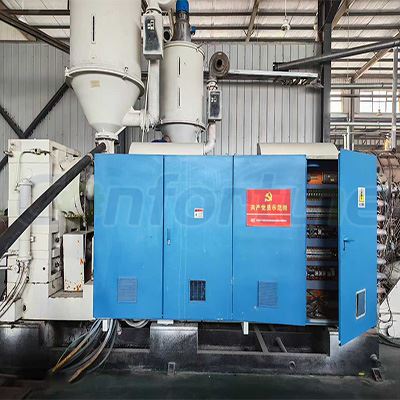
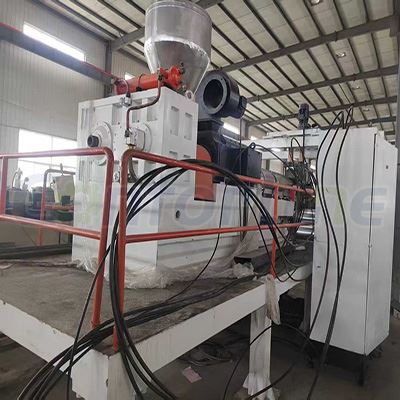
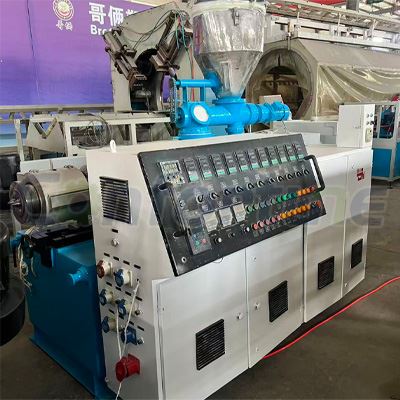
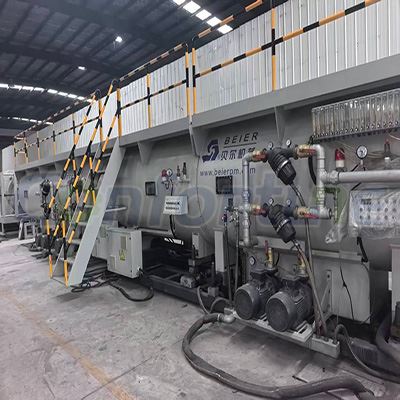
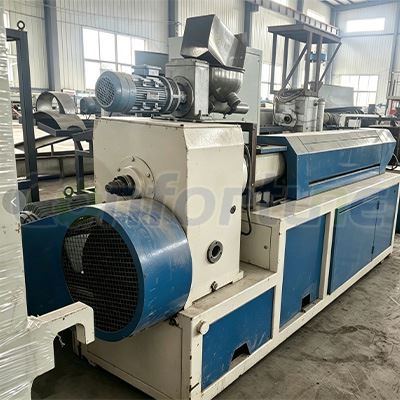
As a supplier of Used PVC Mixers, I've witnessed firsthand the critical role these machines play in various industries. One of the most frequently asked questions from our clients is how to measure the mixing effect of a Used PVC Mixer. In this blog post, I'll share some insights and methods that can help you accurately assess the performance of your mixer.
Understanding the Importance of Mixing Effect
Before delving into the measurement methods, it's crucial to understand why the mixing effect matters. A well - mixed PVC compound ensures consistent product quality, whether it's for pipes, profiles, or other PVC products. Inconsistent mixing can lead to defects such as uneven color distribution, poor mechanical properties, and reduced durability. Therefore, accurately measuring the mixing effect is essential for maintaining high - quality production.
Visual Inspection
The simplest and most straightforward method to assess the mixing effect is through visual inspection. This method is quick and can provide an initial indication of the mixer's performance.
Color Uniformity
When mixing PVC with colorants or additives, a uniform color distribution is a good sign of a well - mixed batch. Take a sample from different parts of the mixed material and compare the color. If there are visible streaks or patches of different colors, it indicates poor mixing. However, visual inspection has its limitations. Some differences in color may be too subtle to detect with the naked eye, especially for light - colored or translucent materials.
Particle Distribution
For PVC compounds with fillers or additives in particle form, check the distribution of these particles. In a well - mixed batch, the particles should be evenly dispersed throughout the PVC matrix. You can use a magnifying glass or a microscope to get a closer look at the sample. If you notice clumps or areas with a higher concentration of particles, it means the mixing process needs improvement.
Sampling and Laboratory Analysis
While visual inspection can give you a general idea, laboratory analysis provides more accurate and detailed information about the mixing effect.
Chemical Analysis
Chemical analysis can determine the concentration of various components in the PVC compound. Techniques such as spectroscopy can be used to measure the amount of additives, stabilizers, and other chemicals in different samples taken from the mixed batch. If the concentration of these components varies significantly between samples, it indicates poor mixing. For example, if the concentration of a heat stabilizer is too low in some parts of the batch, it can lead to thermal degradation during processing.
Physical Property Testing
Physical property testing is another important aspect of assessing the mixing effect. Properties such as tensile strength, impact strength, and hardness can be affected by the mixing quality. Take samples from different locations in the mixed batch and test their physical properties. If there are significant variations in these properties, it suggests that the mixing is not uniform. For instance, a PVC pipe with inconsistent mixing may have different levels of strength at different points, which can lead to premature failure.


Rheological Analysis
Rheological analysis measures the flow properties of the PVC compound. A well - mixed PVC compound should have consistent rheological properties throughout the batch.
Melt Flow Index (MFI)
The Melt Flow Index is a common measure of the flowability of a polymer. It measures the amount of polymer that can flow through a die under a specific temperature and pressure in a given time. Take multiple samples from the mixed batch and measure their MFI. If the MFI values vary widely, it indicates that the mixing is not uniform. A non - uniform MFI can affect the processing of the PVC compound, leading to issues such as uneven extrusion or injection molding.
Viscosity Measurement
Viscosity is another important rheological property. Measuring the viscosity of the PVC compound at different points in the batch can help determine the mixing quality. A well - mixed batch should have a consistent viscosity. Variations in viscosity can be caused by uneven distribution of additives or differences in the degree of plasticization.
Using Tracer Methods
Tracer methods involve adding a small amount of a tracer material to the PVC compound before mixing. The tracer material should be easily detectable and not significantly affect the properties of the PVC compound.
Fluorescent Tracers
Fluorescent tracers can be used to visualize the mixing process. After mixing, the sample can be examined under a UV light. The fluorescent tracer will show up as bright spots, and by observing the distribution of these spots, you can assess the mixing effect. If the fluorescent spots are evenly distributed, it indicates good mixing.
Radioactive Tracers
Radioactive tracers are more accurate but also more complex and expensive to use. They can provide detailed information about the movement and distribution of the tracer material within the PVC compound. By analyzing the distribution of the radioactive tracer, you can determine the mixing efficiency.
Considerations for Used PVC Mixers
When using a Used PVC Mixer, there are some additional factors to consider. The age and condition of the mixer can affect its mixing performance. Components such as the mixing blades may be worn out, which can lead to poor mixing. Regular maintenance and inspection of the mixer are essential to ensure optimal performance.
Also, the mixing parameters, such as mixing time, speed, and temperature, need to be carefully adjusted. These parameters may need to be optimized based on the specific characteristics of the PVC compound and the requirements of the production process.
Conclusion
Measuring the mixing effect of a Used PVC Mixer is a multi - faceted process that involves a combination of visual inspection, laboratory analysis, rheological analysis, and tracer methods. Each method has its advantages and limitations, and using a combination of these methods can provide a more comprehensive assessment of the mixing quality.
If you're in the market for a Used PVC Mixer, or if you're looking for a Second Hand PE Mixer, or even Second Hand Laser Printing, we can offer you high - quality equipment and professional advice. Contact us to discuss your specific needs and start a procurement negotiation.
References
- Campbell, G. A., & White, J. L. (1980). Polymer Mixing. Hanser Publishers.
- Tadmor, Z., & Gogos, C. G. (2006). Principles of Polymer Processing. Wiley - Interscience.
- Rauwendaal, C. (2014). Polymer Extrusion. Hanser Gardner Publications.