

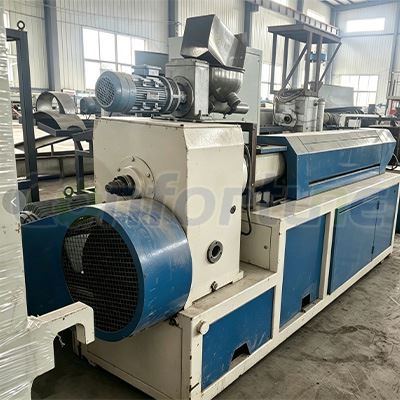
In the realm of plastic processing and manufacturing, extruder equipment plays a pivotal role. As a seasoned supplier of used extruder equipment, I've witnessed firsthand the diverse needs and preferences of our clients. One of the most common inquiries we receive is about the differences between single - screw and twin - screw extruders. In this blog, I'll delve into the technical aspects, applications, advantages, and disadvantages of both types to help you make an informed decision when considering purchasing used extruder equipment.


Technical Structure and Working Principles
Single - Screw Extruders
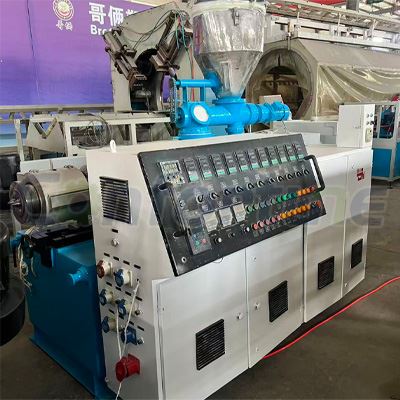
Single - screw extruders are the more traditional and widely recognized type of extruder. They consist of a single rotating screw housed within a heated barrel. The screw is designed with a helical flight that conveys the plastic material from the hopper towards the die. As the screw rotates, it applies pressure and heat to the plastic, melting it and forcing it through the die to form the desired shape.
The working principle of a single - screw extruder is relatively straightforward. The plastic pellets or granules are fed into the hopper and then transported along the barrel by the screw's rotation. The heat from the barrel and the friction generated by the screw's movement melt the plastic. Once the plastic is in a molten state, it is pushed through the die, which gives it the final shape.
Twin - Screw Extruders
Twin - screw extruders, on the other hand, feature two intermeshing screws that rotate within a common barrel. These screws can rotate in the same direction (co - rotating) or in opposite directions (counter - rotating). The co - rotating twin - screw extruders are more commonly used in the industry due to their better mixing and conveying capabilities.
The working principle of twin - screw extruders is more complex than that of single - screw extruders. The two screws work together to convey, mix, and melt the plastic material. The intermeshing of the screws provides a high degree of shear and mixing, which is beneficial for processes that require thorough blending of additives, fillers, or different polymers.
Applications
Single - Screw Extruders
Single - screw extruders are well - suited for applications that require a simple and cost - effective extrusion process. They are commonly used for producing products such as pipes, tubes, profiles, and films. These extruders are ideal for processing materials that have a relatively low viscosity and do not require extensive mixing. For example, in the production of PVC pipes, single - screw extruders can efficiently melt and shape the PVC material into the desired pipe diameter and wall thickness.
Twin - Screw Extruders
Twin - screw extruders are preferred for applications that demand high - intensity mixing and compounding. They are widely used in the production of engineering plastics, masterbatches, and recycled plastics. The excellent mixing capabilities of twin - screw extruders make them suitable for incorporating additives, such as colorants, stabilizers, and flame retardants, into the plastic matrix. For instance, when producing masterbatches, which are concentrated mixtures of pigments or additives in a carrier resin, twin - screw extruders can ensure uniform dispersion of the additives throughout the resin.
Advantages and Disadvantages
Single - Screw Extruders
Advantages
- Cost - effective: Single - screw extruders are generally less expensive to purchase and operate compared to twin - screw extruders. They have a simpler design, which means lower manufacturing costs and fewer components to maintain.
- Easy to operate: The operation of single - screw extruders is relatively straightforward, making them suitable for operators with limited experience. The control systems are also less complex, reducing the learning curve.
- Low shear: Single - screw extruders generate less shear compared to twin - screw extruders. This is beneficial for processing heat - sensitive materials, as it reduces the risk of thermal degradation.
Disadvantages
- Limited mixing capabilities: Single - screw extruders have limited mixing efficiency, especially when it comes to blending different polymers or incorporating high - load additives. This can result in non - uniform product quality.
- Lower throughput: The throughput of single - screw extruders is generally lower compared to twin - screw extruders. This can be a limitation for large - scale production.
Twin - Screw Extruders
Advantages
- Excellent mixing: Twin - screw extruders offer superior mixing capabilities due to the intermeshing of the screws. This ensures uniform dispersion of additives and polymers, resulting in high - quality products.
- High throughput: Twin - screw extruders can achieve higher throughput rates compared to single - screw extruders. This makes them suitable for large - scale production.
- Versatility: Twin - screw extruders can process a wide range of materials, including difficult - to - process polymers and composites. They can also be easily adapted for different processes, such as reactive extrusion and devolatilization.
Disadvantages
- Higher cost: Twin - screw extruders are more expensive to purchase and maintain compared to single - screw extruders. The complex design and additional components contribute to the higher cost.
- Complex operation: The operation of twin - screw extruders requires more expertise and training. The control systems are more sophisticated, and the process parameters need to be carefully adjusted to achieve optimal results.
Our Offerings
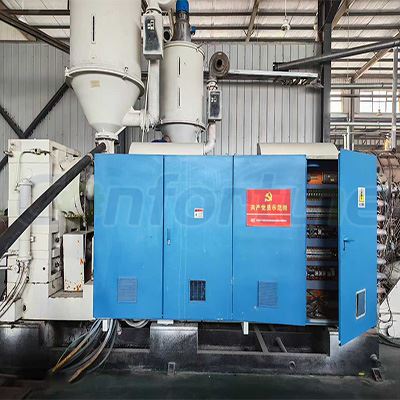
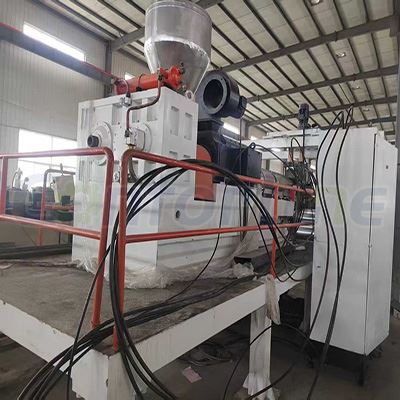
As a supplier of used extruder equipment, we have a wide range of single - screw and twin - screw extruders available for sale. Our Used Twin - screw Extruder Machine is a popular choice among clients who require high - performance mixing and compounding capabilities. These machines have been thoroughly inspected and refurbished to ensure reliable operation.
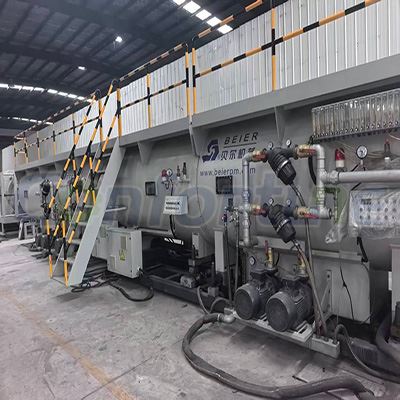
In addition to twin - screw extruders, we also offer Second Hand PVC Lamination Machine and Coating For Exterior PVC. Our PVC lamination machines are suitable for applying a protective or decorative layer to PVC products, while our exterior PVC coating equipment can enhance the durability and weather resistance of PVC materials.
Conclusion
In conclusion, the choice between single - screw and twin - screw extruders depends on the specific requirements of your application. If you need a simple and cost - effective solution for basic extrusion processes, a single - screw extruder may be the right choice. However, if you require high - intensity mixing, compounding, or large - scale production, a twin - screw extruder is likely to be more suitable.
As a trusted supplier of used extruder equipment, we are committed to providing our clients with high - quality machines at competitive prices. If you are interested in learning more about our products or have any questions about single - screw and twin - screw extruders, please feel free to contact us. We look forward to discussing your needs and helping you find the perfect extruder equipment for your business.
References
- "Extrusion of Polymers: Theory and Practice" by Allan A. Griff.
- "Handbook of Plastic Extrusion Technology" by Charles Rauwendaal.