

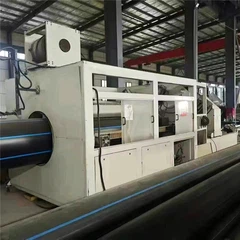
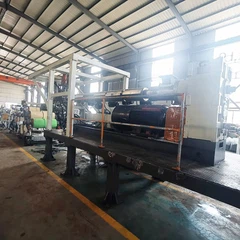
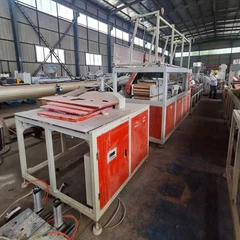
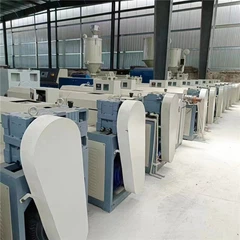

A used extruder is not a second-best option, but rather a wise key to breaking cost barriers and achieving rapid market entry.
(1)Extremely Low Initial Investment: A well-maintained used extruder typically costs only 30% to 60% of a new one of the same model. This means you can use the budget for a single new machine to set up a complete used production line (extruder + key auxiliary equipment) and achieve production capacity immediately.
(2)Crossing the Capital Threshold: For entrepreneurs, small factories, or trial production of new projects, this significantly lowers the industry entry barrier. It allows you to allocate more of your valuable cash flow to market development, raw material procurement, and team building.
(3)Spreading Financial Risks: Converting large capital expenditures into one-time, lower fixed asset investments results in a more flexible financial structure. The investment payback period may also be significantly shortened.
(1)Skip the Lead Time: For a new extruder, the cycle from order placement to delivery, installation, and commissioning usually takes 3 to 6 months or even longer. Used equipment, however, is readily available. Once inspection and transaction are completed, it can be quickly transported to the site and put into production within a few weeks, allowing for rapid response to market opportunities.
(2)Avoid New Equipment Break-In Risks: Any new equipment may require a break-in period for fine-tuning during its initial operation phase. High-quality used equipment, though, has already gone through this process with its previous owner. Its mechanical components are in a stable working state, and as long as the core parts are intact, it can start producing stably right after being put into use.
(1)Stability of a Veteran Machine: Key components such as the barrel, gearbox, and main motor, if they can withstand long-term production tests and still remain in good condition, are a clear testament to the robustness and durability of their basic design. It has already proven itself not to be a machine with inherent defects.
(2)Clear Process Compatibility: By checking the equipment's history, you can clearly find out what materials it was previously used to process (For example PP, PE, PVC) and what products it was used to manufacture (For example, pipes, profiles, pelletizing). This provides solid references for you to judge whether it is compatible with your process, avoiding the risk of wrong model selection for new machines.
(1)Ideal Choice for Trial Production & Project Verification:If you want to test a new market or a new material but are unsure about its long-term demand, investing in a new machine poses excessive risks. Used equipment serves as a perfect testing platform - even if the project is terminated, the loss from reselling the used equipment is far lower than the depreciation of a new machine.
(2)Capacity Supplement & Backup Machine:When the main production line is operating at full capacity, purchasing a used machine as a capacity supplement or emergency backup is the most cost-effective strategy. It ensures no disruptions during peak order periods.