

What is the production capacity of a used pipe extruder?
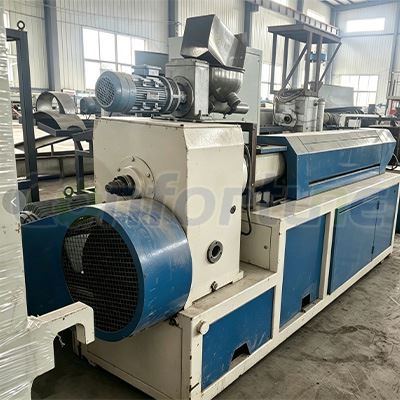
As a supplier of used pipe extruders, I often encounter inquiries regarding the production capacity of these machines. Understanding the production capacity is crucial for businesses looking to invest in used pipe extruders, as it directly impacts the efficiency and profitability of their operations. In this blog post, I will delve into the factors that influence the production capacity of a used pipe extruder and provide insights to help you make an informed decision.
Factors Affecting Production Capacity
The production capacity of a used pipe extruder is determined by several key factors, each of which plays a significant role in the overall output of the machine.
-
Screw Diameter and L/D Ratio: The screw diameter and length-to-diameter (L/D) ratio are critical parameters that affect the plasticizing and conveying capabilities of the extruder. A larger screw diameter and higher L/D ratio generally result in higher production rates, as they allow for greater material throughput and more efficient melting and mixing of the plastic resin. For example, an extruder with a larger screw diameter can process more material per revolution, leading to increased output.
-
Motor Power: The motor power of the extruder is directly related to its ability to drive the screw and overcome the resistance of the plastic material during the extrusion process. A higher motor power allows the extruder to operate at higher speeds and handle more viscous materials, resulting in increased production capacity. However, it is important to note that the motor power should be matched to the screw diameter and other machine specifications to ensure optimal performance.
-
Die Design: The die is a crucial component of the pipe extruder, as it determines the shape and size of the extruded pipe. A well-designed die can minimize pressure drop and ensure uniform flow of the plastic material, resulting in higher production rates and better-quality pipes. The die design should be optimized for the specific pipe dimensions and material requirements to achieve maximum production efficiency.
-
Cooling System: The cooling system of the extruder plays a vital role in determining the production capacity by controlling the temperature of the extruded pipe. Efficient cooling helps to solidify the pipe quickly, allowing for higher extrusion speeds and increased output. A well-designed cooling system should be able to provide uniform cooling along the length of the pipe to prevent warping and other defects.
-
Material Properties: The properties of the plastic material being extruded, such as melt flow index, viscosity, and density, can have a significant impact on the production capacity of the extruder. Materials with higher melt flow indices are generally easier to process and can be extruded at higher speeds, resulting in increased output. However, other factors such as the presence of additives and the moisture content of the material can also affect the extrusion process and production capacity.
Assessing Production Capacity
When evaluating the production capacity of a used pipe extruder, it is important to consider the specific requirements of your application. Here are some steps to help you assess the production capacity of a used pipe extruder:
-
Determine Your Production Requirements: Start by defining your production requirements, including the pipe diameter, wall thickness, and production rate. This will help you narrow down your search for a used pipe extruder that can meet your specific needs.
-
Review the Machine Specifications: Carefully review the specifications of the used pipe extruder, including the screw diameter, L/D ratio, motor power, and die design. Compare these specifications with your production requirements to determine if the machine is capable of meeting your needs.
-
Consider the Machine's Condition: The condition of the used pipe extruder can have a significant impact on its production capacity. Inspect the machine thoroughly for signs of wear and tear, and ask for maintenance records to ensure that the machine has been well-maintained. A machine in good condition is more likely to operate efficiently and produce high-quality pipes.
-
Request a Test Run: If possible, request a test run of the used pipe extruder to evaluate its performance and production capacity. This will allow you to see the machine in action and determine if it meets your expectations.

Real-World Examples
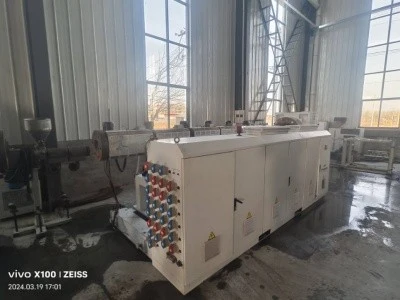
To illustrate the production capacity of used pipe extruders, let's consider some real-world examples.
Example 1: Small-Scale Production
A small-scale pipe manufacturing company is looking to invest in a used pipe extruder for the production of HDPE pipes with a diameter of 50 mm and a wall thickness of 3 mm. They require a production rate of approximately 100 kg per hour. After reviewing the specifications of several used pipe extruders, they select a machine with a screw diameter of 65 mm, an L/D ratio of 28:1, and a motor power of 30 kW. The machine is in good condition and has a well-designed die for the production of 50 mm HDPE pipes. During a test run, the machine is able to achieve a production rate of 110 kg per hour, exceeding the company's requirements.
Example 2: Large-Scale Production
A large-scale pipe manufacturing company is looking to expand its production capacity by investing in a used pipe extruder for the production of HDPE pipes with a diameter of 200 mm and a wall thickness of 10 mm. They require a production rate of approximately 500 kg per hour. After conducting a thorough search, they find a used pipe extruder with a screw diameter of 120 mm, an L/D ratio of 30:1, and a motor power of 110 kW. The machine is in excellent condition and has a state-of-the-art die design for the production of large-diameter HDPE pipes. During a test run, the machine is able to achieve a production rate of 520 kg per hour, meeting the company's requirements.
Conclusion
The production capacity of a used pipe extruder is influenced by several factors, including the screw diameter, L/D ratio, motor power, die design, cooling system, and material properties. By carefully considering these factors and assessing the machine's specifications and condition, you can select a used pipe extruder that meets your production requirements and provides optimal performance.
If you are interested in purchasing a used pipe extruder, we offer a wide range of high-quality machines to suit your needs. Our inventory includes Used Hdpe Pipe Extruder Machine And Production Line, Old Hdpe Pipe Extrusion Machine, and Old HDPE Pipe Machine. Contact us today to discuss your requirements and explore our available options.
References
- Dooner, M., & Clynes, M. (2012). Plastic Extrusion Technology. Elsevier.
- Rosato, D. V., & Rosato, D. P. (2004). Extrusion Dies for Plastics and Rubber: Design and Engineering Computations. Hanser Publishers.
- Tadmor, Z., & Gogos, C. G. (2006). Principles of Polymer Processing. Wiley-Interscience.